
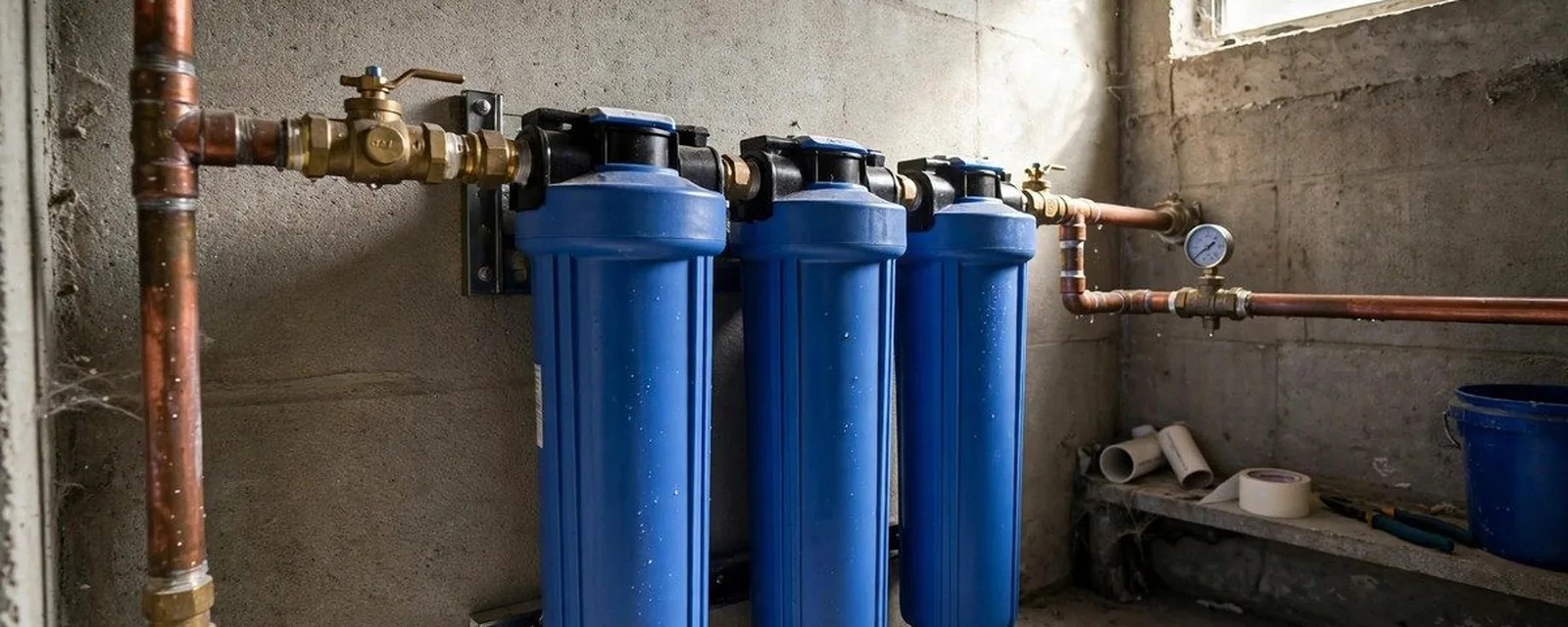
Test the water before you buy any tank
Water softener and filtration service in Shafter, CA means a licensed plumber installs and services equipment that treats water at the house, after you know what is in it. The right system depends on the water test, not on the brand name or on what a neighbor owns. We do not state a hardness figure for Shafter, because none is verified.
Start with a home test kit for a quick read, or send a sample to a state-certified lab for hardness, iron, chlorine and total dissolved solids. Then ask the City of Shafter utilities for its annual water quality report. Compare the lab's numbers with the report before you choose equipment.
A planned visit is calm. The dispatcher can book a plumber at your convenience, and same-day appointments are available when the schedule allows.
What mineral-heavy water leaves behind in a house
If a test shows hard water, these are the signs you will recognize.
- White crust on faucets and showerheads. Calcium and magnesium dry into scale around aerators and spray holes.
- Cloudy glassware and spots on dishes. Minerals bake on in the dishwasher.
- Scale in the water heater. A layer on the bottom of the tank or heat exchanger makes the unit work harder and rumble.
- Stiff laundry and dry skin. Soap does not rinse cleanly.
- Weak flow in older lines. Scale narrows small-bore fixtures and valves.
Scale does not always mean a softener is the answer. Rust stains, a chlorine smell or a metallic taste point to iron, chlorine or other issues that a softener does not fix.
Softener, carbon filter, reverse osmosis or salt-free conditioner
Each treats a different problem, and many homes use two together.
| Type | What it does | What it does not do |
|---|---|---|
| Salt-based softener (ion exchange) | Swaps calcium and magnesium for sodium or potassium to stop scale | Does not remove chlorine, bacteria or most contaminants |
| Whole-house carbon filter | Reduces chlorine taste and odor and some organic compounds | Does not remove hardness |
| Under-sink reverse osmosis | Filters drinking and cooking water at one tap through a membrane | Wastes some water and does not treat the whole house |
| Salt-free conditioner | Changes how scale forms so it clings less to surfaces | Does not remove hardness minerals and gives mixed results |
A softener and an RO unit pair well. The softener protects the heater and fixtures, and the RO tap cleans up water for drinking.
Ready to plan a system? Call to book
Tell the dispatcher what you see at the tap and what test results you have.
Reading the utility report and local sampling
The City of Shafter provides water, sewer and trash service to residential and commercial customers. Utility Services at City Hall, 336 Pacific Avenue, is the right place to ask for the annual report, and billing questions go to the Finance Department. Those reports list what the city measured, but your tap may differ because of the plumbing between the meter and the faucet.
A home test shows the water as it arrives at your fixtures. If you live near McFarland, the City of McFarland posts its own water testing reports on its website, including quarterly 1,2,3-trichloropropane (1,2,3-TCP) reports, and residents can read them there. See the McFarland plumbing page if you are outside Shafter.
What a softener install needs from your house
The site has to supply a few basics, and the plumber checks each before setting the tank.
- Space and floorA level spot near the main line, usually in a garage or utility closet, with room to add salt.
- Bypass valveThree valves let you isolate the unit and keep water flowing during service.
- Drain connectionThe regeneration cycle sends brine to a floor drain, standpipe or laundry tub, through an air gap.
- PowerA standard outlet powers the control head. We do not run new circuits, and a new outlet needs a licensed electrician.
- Outdoor tapsA tee ahead of the softener keeps hose bibs on untreated water if you want that.
- Brine dischargeRules for where brine may go vary, so ask the local authority before choosing the drain point.
Salt, resin and a maintenance rhythm that works
A salt-based softener needs refilling. Check the brine tank every month or two and keep the salt level above the water line. A salt bridge, a hard crust that forms when salt cakes, stops the unit from making brine, and a broom handle breaks it.
Resin beads wear out over time, and iron in the water can coat them. A flow meter or timer on the control head sets how often the unit regenerates, and a bad setting wastes salt or lets hard water through.
If an existing conditioner stops working, the fault is often a stuck valve, a clogged injector or a dead control board, and we can look at it. We repair common failures, though some older heads are cheaper to replace than to rebuild.
Pairing treatment with the water heater and the kitchen tap
Scale builds fastest where water is heated. A tank heater hides it at the bottom, and a tankless unit can clog its heat exchanger, so the tankless water heater page covers descaling. If your heater already rumbles or runs slow, the water heater repair page explains what we check.
An under-sink RO unit adds a small faucet and a storage tank under the sink. It needs a drain saddle on the sink line and a cold feed. Our plumbing installation page covers the other fixtures that join the system, such as a refrigerator line.
What changes the price of a treatment system
We give a clear price before work starts. These factors move it.
- Type and size of system. A softener, a whole-house filter and an RO unit have different parts.
- Water test results. Iron or heavy hardness may need a larger resin tank or pre-filter.
- Location and plumbing changes. A tank far from the main needs more pipe.
- Drain and power access. A nearby standpipe and outlet keep the job simple.
- Ongoing salt and filters. Salt, cartridges and membranes are continuing costs.
Standard homeowner insurance usually covers sudden damage and not treatment equipment or scale buildup, so check your policy. Call the dispatcher for the real number.
Treatment questions from Shafter households
Do I need a water softener in Shafter?
That depends on a test of your own tap. We do not state a hardness figure for Shafter, because none is verified.
Use a test kit or a lab, and ask the City of Shafter utilities for its annual water quality report. The numbers show whether scale is likely.
What is the difference between a softener and a filter?
A softener removes hardness minerals so scale stops forming. A carbon filter reduces chlorine taste and odor and some organic compounds.
Many homes use both, with the softener at the main line and a filter at the kitchen tap.
Does reverse osmosis remove everything?
No. RO removes many dissolved solids but wastes some water and treats only one tap. The membrane and pre-filters need replacing on a schedule.
It is best used for drinking and cooking water, placed under the kitchen sink.
Where does the softener drain go?
The brine goes to a floor drain, standpipe or laundry tub, through an air gap so drain water cannot siphon back into the unit. Rules for brine discharge vary, so ask first.
The plumber checks the route during the visit.
What about salt-free conditioners?
They change how scale forms rather than removing hardness minerals. Results are mixed and depend on the water, so a test helps decide.
If a conditioner is already installed and has stopped working, we can look at the valve and control head.
What affects the cost of a softener or filter?
System type, test results, tank location, drain and power access, and continuing salt or cartridge costs all matter.
Call for a clear price before work starts. Because no verified local hardness figure exists, the final system size always follows your own test.
Want help choosing equipment? Call (855) 575-2890 and the dispatcher will set up a visit.