
Whether you need a repipe or only a repair
Whole-house repiping in Shafter, CA means a licensed plumber replaces the water supply lines that run from the main shutoff to every faucet, toilet and appliance. It is a planned project, and most homes never need one. One failed fitting or a single leaking section is a repair, not a reason to pull out every pipe.
The case for a repipe builds when leaks keep appearing in different places. Three pinholes in six months is a pattern, while one leak at a corroded valve is a bad valve. A plumber looks at the age of the material, how the pipe fails and whether new runs can reach the old fixtures.
Our dispatcher can book a visit at your convenience, and same-day appointments are available when the schedule allows. We will tell you if spot repairs make more sense than a full repipe.
Clues that the pipes inside the walls are wearing out
No single sign proves it, but several together point the same way.
- Pinhole leaks. Tiny green or white crusted spots on copper, or damp spots on a wall with no obvious source, often start from the inside of the pipe.
- Brown or orange water. Rust flakes from old steel lines show up first after the water sits overnight.
- Weak flow at several fixtures. Mineral and rust buildup narrows old pipe until a shower runs at a trickle.
- Repeated repairs. Each patch shifts stress to the next weak section.
- Metallic taste or odor. Corrosion byproducts reach the tap.
- A water bill that creeps up. A slow hidden leak adds up even when nothing looks wet.
Before settling on a repipe, rule out other causes. A failing pressure regulator, a leaking water heater connection or a hidden line break can mimic the same symptoms, so a leak test comes first. See leak detection for how we find these.
PEX, copper and CPVC compared on the points that matter
Each material has real trade-offs, and the best one depends on the house and on your priorities.
| Material | Strength | Honest drawback |
|---|---|---|
| PEX | Flexible, so it snakes through walls with fewer openings and few joints | Cannot sit in direct sunlight and needs protection from rodents and heat sources |
| Copper | Long track record, handles heat well and resists sunlight and rodents | Can pit in aggressive water and costs more to buy and to solder |
| CPVC | Rigid plastic, simple to join with solvent cement | Turns brittle with age and heat and cracks at fittings |
Summer heat in Shafter, with a July average high near 99 F, is hard on attic lines. If the supply runs through an attic, ask the plumber about insulation, supports and keeping PEX out of direct sun.
Thinking about a repipe? Call to talk it through
Describe the leaks or the water color and the dispatcher books a look at your piping.
Galvanized steel, polybutylene and the lines that were widely replaced
Galvanized steel is an old iron pipe with a zinc coating. The coating wears away, rust forms inside and the bore shrinks, which is why flow drops long before a leak shows. These lines are usually replaced rather than patched, because a new fitting on soft, corroded pipe often fails at the next thread.
Polybutylene is a gray or blue plastic pipe that was widely replaced after it showed a pattern of failing at its fittings. If a camera or a visual check at an access point reveals it, we recommend replacement before it leaks.
We do not claim which Shafter homes have which materials. A look at the main shutoff, the water heater connections and any access panel tells us what runs through the house. The water line repair page covers the pipe from the meter to the house.
How a repipe moves from shutoff to pressure test
The method aims at small access openings and a short time without water.
- Walk the houseThe plumber maps each fixture, picks routes through attics, crawl spaces and closets, and marks where openings are needed.
- Shut off the waterThe main shutoff closes, and the old lines are drained and disconnected at the fixtures.
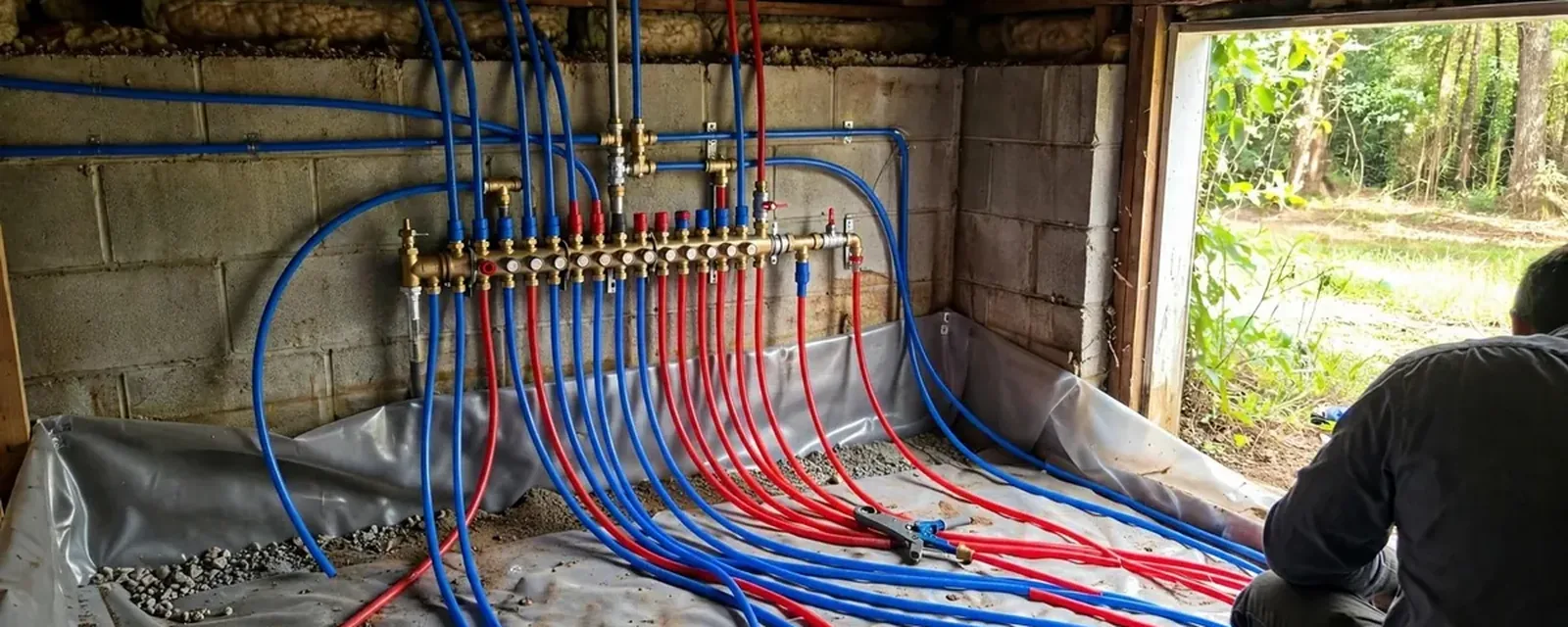
- Run the new linesManifold or trunk-and-branch runs are pulled through, with PEX bent around corners and copper soldered or crimped at joints.
- Reconnect fixturesNew angle stops and supply lines go on at sinks and toilets, and the water heater is reconnected.
- Pressure testThe system is filled and held at pressure to check every joint before any wall is closed.
- Cap and clean upOld pipe comes out where it can, and sections buried in walls are capped.
Walls, patching and the days without water
A repipe means some drywall comes open. Flexible PEX keeps those openings small, since lines are pulled through existing holes and framing. Patching drywall, texture and paint is a separate trade, and we will say which part we handle and which you arrange.
The water is off while lines are swapped, but the plumber will plan around when you need it. We give an honest sense of the duration after seeing the house, and we do not quote day counts without a look.
Permit rules vary by job, so ask the Building and Safety Division at City Hall whether your project needs one. Any required inspection goes through the city, and the California Plumbing Code (Part 5 of Title 24) sets the standard for materials and installation.
Cast iron drains are a different job
Repiping usually refers to the supply side, the pressurized lines that carry clean water in. Cast iron drain and waste lines are a separate system, and they fail differently, through scaling, cracking at the bell joints and slow rusting from the inside.
A camera inspection shows whether a drain line needs repair, relining or replacement. Pricing and timing differ from a supply repipe, so ask for each part separately.
If a leak runs under the slab, that is its own repair, covered on the slab leak repair page. We also serve McFarland, roughly 15 miles away, and you can read about it on the McFarland plumbing page.
What drives the cost of a repipe
We give a clear price before work starts. These factors shape it.
- House size. More fixtures and longer runs mean more pipe and labor.
- Material. PEX, copper and CPVC differ in material cost and install time.
- Access. Open attic or crawl space is simpler than finished walls and two stories.
- Number of bathrooms and fixtures. Each one needs new stops and supply connections.
- Wall and ceiling repair. Patching and paint are extra and may be done by another trade.
- Permit and inspection. Rules vary, so ask the Building and Safety Division.
Standard homeowner insurance usually covers sudden damage and not worn-out pipe, so check your policy. Call the dispatcher for the real number for your house.
Repiping questions from Shafter homeowners
How do I know whether I need a full repipe?
Look for leaks in several places, discolored water and weak flow at more than one fixture. A single leak usually means a repair.
A plumber can pressure test the system and look at access points to decide. Ask the plumber to explain what they see before you decide, since the evidence differs from house to house.
Is PEX or copper better for a repipe?
PEX is flexible, so it needs fewer wall openings and joints. Copper handles heat and sunlight and has a longer track record.
Neither is better in every house. The plumber weighs access, budget and where the lines run. The plumber also considers how many walls would need to open for each option.
Will I be without water during the repipe?
Yes, for part of the project. The main shutoff is closed while old lines come out and new ones are connected.
The plumber plans the order to restore water to the house as soon as possible. Ask about a plan for the kitchen and one bathroom.
Does a repipe need a permit?
Permit rules vary by job, and this site does not state them. Ask the Building and Safety Division at City Hall whether your project needs a permit.
If one is required, the inspection happens through the city. Ask the city office before you schedule, since a required inspection can affect the timeline.
Who repairs the drywall afterward?
Patching, texture and paint are a separate trade. The plumber keeps openings small and closes access after the pressure test.
Tell the dispatcher whether you want us to handle patching or hire your own. If you prefer, a handyman or drywall finisher can do the patch while the pipes stay untouched.
What affects the cost of a repipe?
House size, pipe material, access, fixture count and wall repair all matter. Permit costs vary.
Call for a clear price before work starts. The real number depends on seeing the house. The cost of drywall repair, permits and fixtures is separate from the pipe itself.
Planning a repipe and unsure where to start? Call (855) 575-2890 and the dispatcher will set up a visit.