
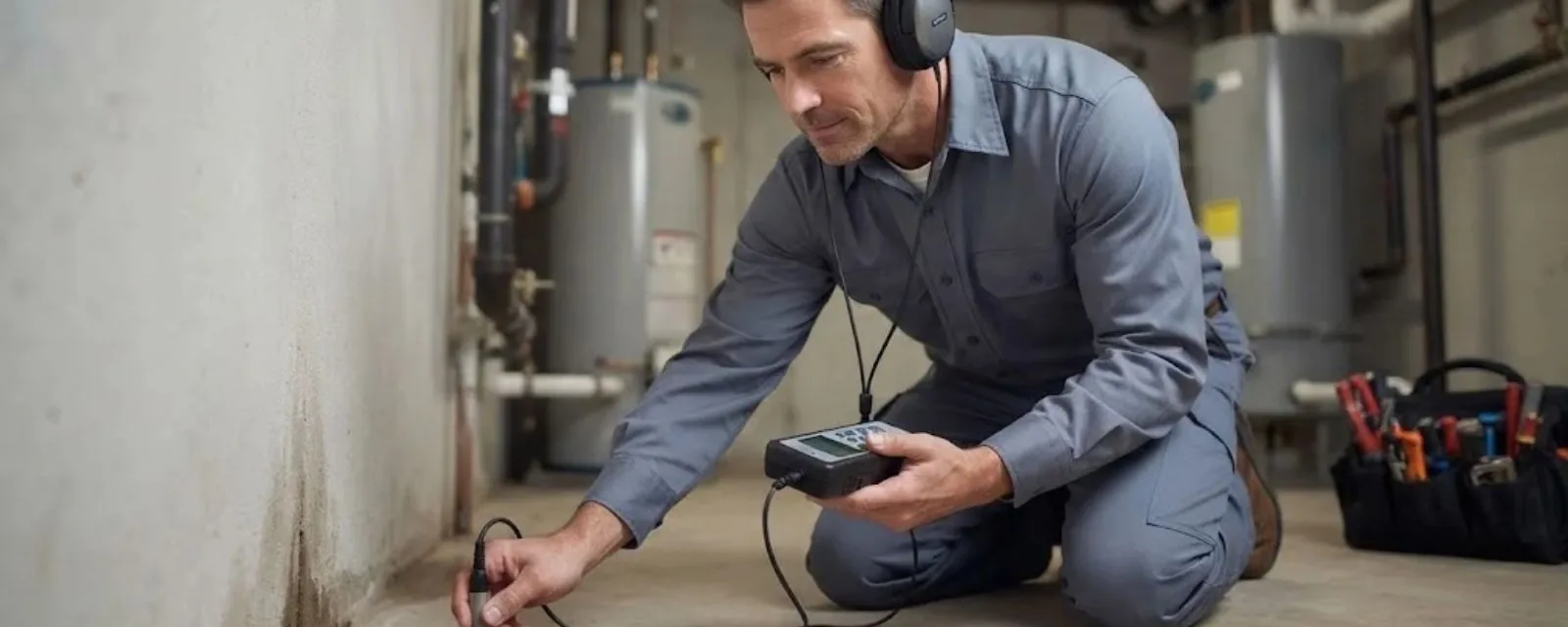
Water going somewhere you cannot see, right now
Emergency leak detection in Shafter, CA means a licensed plumber locates the exact spot where pressurized water is escaping, without cutting into a wall, floor or yard to guess. Our dispatcher answers 24/7, so a spinning meter at 2 a.m. gets the same attention as one at noon. If water is visibly pooling, close the main shutoff valve and keep people away from wet floors near outlets.
A slow leak that is not soaking anything does not need the whole house shut down. Turn off every tap and appliance, write down the meter reading, and leave it alone, because that number is the first piece of evidence. Call (855) 575-2890 and describe the clue, such as a damp spot, a warm patch of floor or a bill that jumped.
Same-day appointments are available when the schedule allows, and after-hours calls reach the same line. Hidden water that is wetting framing or insulation is worth a call on a weekend, since damp wood and drywall do not wait for Monday.
From the clue you noticed to the test that answers it
Each symptom points at a different part of the plumbing, so each gets a different first test.
Meter creeps with every tap off
A shutoff test at the house splits the problem into inside the building or between the meter and the building.
Bill climbing month after month
A dye test in the toilet tanks and a look at the irrigation timer come before any digging.
One warm spot on the floor
A hot water line may be leaking in or under the concrete. Electronic listening and thermal imaging confirm it.
Brown stain spreading on a ceiling
A moisture meter maps the wet area, then pressure tests on each line show which pipe feeds it.
Soft ground or a green stripe in the yard
A ground microphone and a line locator follow the pipe to the loudest point.
Water sounds in a silent house
Listening at wall surfaces and fixture shutoffs narrows the noise to one branch.
Meter still running or a bill that keeps climbing
The water meter is the cheapest leak detector on the property. Most residential meters carry a low-flow indicator, a small triangle, star or dial that spins when even a trickle passes. If it moves while every fixture is closed, water is leaving the pipes somewhere.
Rule out the quiet culprits before blaming a buried pipe. A worn toilet flapper can turn that dial all night, and a few drops of food coloring in the tank will show in the bowl within fifteen minutes if it seeps. Ice makers, softener recharge cycles and sprinkler timers also draw water on their own schedule.
A bill that rises without any spinning dial usually points to a small leak that only runs at certain hours, such as an irrigation valve that weeps after the timer fires. For questions about the charges themselves, contact the City of Shafter Utility Services, because the Finance Department handles utility billing.
Meter still turning? Call now
Give the dispatcher the clue you found and a plumber with listening gear is lined up.
Running the meter test yourself in about twenty minutes
This check costs nothing and tells the dispatcher a great deal before a truck rolls.
- Stop all water useClose taps, pause the dishwasher and washer, and do not flush. Make sure no one is in the shower.
- Open the meter lid and read itLift the lid carefully, wipe the glass, and note the numbers plus the position of the low-flow indicator.
- Wait fifteen minutesDo not touch a fixture. Look again. Any change in the numbers or a turning indicator means water is moving.
- Close the main valve at the houseCheck the meter once more. If the indicator stops, the leak is inside the house. If it keeps turning, suspect the line between the meter and the house.
- Tell the dispatcher what you sawBoth readings, and whether the indicator stopped, decide which gear goes on the truck.
Ceiling stains and damp walls that keep coming back
A brown ring on a ceiling shows where water finally reached the drywall, not where it started. Water travels along joists, pipes and top plates before it drips, so the source often sits several feet sideways from the stain. A stain that grows only after showers points at a tub drain or valve, and one that grows after the dishwasher runs points at a supply line or drain tie-in nearby.
We start with a moisture meter and a thermal camera to outline the wet zone, since wet and dry drywall read differently in infrared. Then pressure tests isolate the hot line, the cold line and the drains one at a time. If the map points into a wall cavity, a small inspection hole behind a switch plate or fixture trim lets a scope look before anything larger is opened.
A ceiling that is bulging or dripping steadily is urgent. Put a bucket under it, and if the drywall is ballooning, a small hole at the lowest point drains the trapped water so the whole panel does not drop. Switch off the breaker for any light fixture in the wet area. If water is pouring instead of seeping, treat it as a burst pipe and close the main.
Under the house and under the slab
A raised foundation leaves a crawlspace where supply lines, drains and water heater feeds run in the open. A musty smell, soft subfloor, sagging insulation or wet soil under one fixture all point at the leak. We do the crawling, and you should stay out if there is standing water near wiring.
Many Central Valley homes sit on a concrete slab instead, with lines in or beneath the concrete. A floor that feels warm in one spot, a water heater that never seems to rest, or faint running water in a quiet house is the classic hot slab clue. Electronic listening and a pressure test that separates hot from cold confirm it, and the repair choices are laid out on the slab leak repair page.
Buried lines, soggy yards and the meter box
Between the meter and the house, a pressurized line sits in soil, and the only clues are a wet patch, a sunken strip of lawn or grass that stays green in August. Shafter's July highs average about 99 F, so a lush strip while the rest of the yard browns deserves a closer look. Soil carries water sideways, so the wet spot can sit ten feet or more from the actual break.
A ground microphone and a correlator listen to the pipe itself. Tracer gas, a harmless hydrogen and nitrogen blend, can be pushed into an isolated line and sniffed where it rises through the soil. Once the point is marked, the question becomes how to reach it, and the water line repair page covers dig and no-dig options.
A meter box that stays full of water, or a wet ring of soil around the lid, can mean a leaking fitting on either side of the meter. Ask the City of Shafter utilities where the city side ends before anyone digs, since who pays for the fix depends on that line.
Sprinkler zones, drip lines and the backyard pool
Irrigation is the leak nobody blames. Summer watering in the valley runs hard, so a cracked riser or a valve that does not seat can lose water every cycle without a visible puddle. Walk each zone while it runs and look for geysers, mushy soil and heads that spit weakly, which shows pressure being lost upstream.
We test the pressurized supply to the irrigation valves and the backflow assembly. Broken heads, rotted drip tubing and buried zone pipe are often landscape work, and we say so when the plumbing checks out.
Pool and spa leaks
For a pool or spa we find the plumbing side only, meaning the fill line, the auto-fill valve and the supply to the equipment pad. A bucket test on the top step compares pool loss against evaporation. Shell, liner and equipment repairs belong to a pool specialist, and we do not repair pool equipment.
Which detection method finds which kind of leak
Each method has a job and a blind spot, so crews stack two or three before marking a spot.
| Method | Good at finding | Limit worth knowing |
|---|---|---|
| Meter and low-flow indicator | Whether any water is moving at all | It cannot say where the water goes. |
| Pressure test on isolated lines | Which line, hot, cold or irrigation, is losing pressure | It gives a pass or fail reading and no map. |
| Acoustic listening and correlator | The hiss of pressurized leaks in metal pipe and under concrete | Plastic pipe, traffic and pumps dull the sound. |
| Thermal imaging | Hot water leaks and wet materials behind a surface | It needs a temperature difference, so cold line leaks read weaker. |
| Tracer gas | Small leaks when other methods only give a zone | The line must be isolated and the soil must let the gas rise. |
| Pipe camera | Cracks and breaks inside drain and sewer lines | It does not see inside pressurized supply pipe. |
What no tool can promise and how small the opening can be
Every method has a blind spot, and an honest crew keeps testing until two of them agree. Acoustic gear can mislead on plastic pipe, thermal imaging struggles in a hot attic in July, and tracer gas needs a path through the soil. When methods disagree, we say that out loud instead of marking a guess.
No-dig methods shrink the opening, but some leaks still call for a wall opened or a slab cut. We aim for the smallest hole that reaches the pipe and leave drywall, flooring and paint to other trades. When the pipe itself is worn out, the better answer may be repiping rather than chasing one patch after another.
What moves the cost of a leak search
The bill depends on the job in front of the plumber, and these are the real drivers.
- Access Attics, crawlspaces and finished slabs take longer to reach than an open yard.
- Number of methods needed A meter test may settle it, while a hidden slab leak can need listening, thermal imaging and a pressure test.
- Size and layout One bathroom is a smaller search than a duplex, a shop or a long yard run.
- Isolation Lines with working valves test faster than lines that must be capped to separate them.
- Time of the call A night or weekend dispatch is priced differently from a scheduled visit.
Standard homeowner insurance usually covers sudden, accidental damage and often not the slow leak that comes from wear, so check your policy before assuming. Some policies pay for the access needed to reach a pipe and some do not. Keep photos and the plumber's written findings. The dispatcher gives the real number once the clue is described, and the clear price comes before work starts.
Leak detection questions from Shafter homeowners
Do you handle leak detection emergencies at night or on weekends in Shafter?
Yes. The dispatch line runs 24/7, including overnight and weekends, and same-day appointments are available when the schedule allows.
Say whether the meter is moving and whether water is visible. If it is pooling, close the main valve and wait for the plumber.
Can you find a leak without tearing up my floors?
Usually the search itself needs no demolition. Listening gear, thermal imaging and pressure tests work from the surface or from fixture shutoffs.
Reaching the pipe to repair it may still need an opening, and we keep that opening as small as the pipe location allows.
How can I tell whether a high water bill means a leak?
Run the meter test with every fixture off. A moving low-flow indicator means water is escaping.
Also drop food coloring into each toilet tank and wait fifteen minutes. If the color reaches the bowl, the flapper is leaking. For billing questions, contact the City of Shafter Utility Services.
Does insurance pay for finding a leak?
It depends on the policy. Many cover sudden damage and may help with access costs, while wear and slow seepage are often excluded.
Ask your insurer before the work starts, and keep a written report with photos and the test results.
What if the leak turns out to be in a drain or sewer line?
Drain leaks do not show up on a pressure test, because those lines run partly full. A camera is the right tool, and our sewer camera inspection records the pipe interior so the break can be seen.
Wet soil with a sewer smell is the usual hint.
Can you help if I live in Wasco?
Our dispatcher can talk through the situation with anyone in the area and explain what a visit involves. Wasco is roughly 10 miles from Shafter up State Route 43.
The page for emergency plumber service in Wasco explains how that works.
Still unsure what you are seeing? Call (855) 575-2890 and describe it to the dispatcher.