
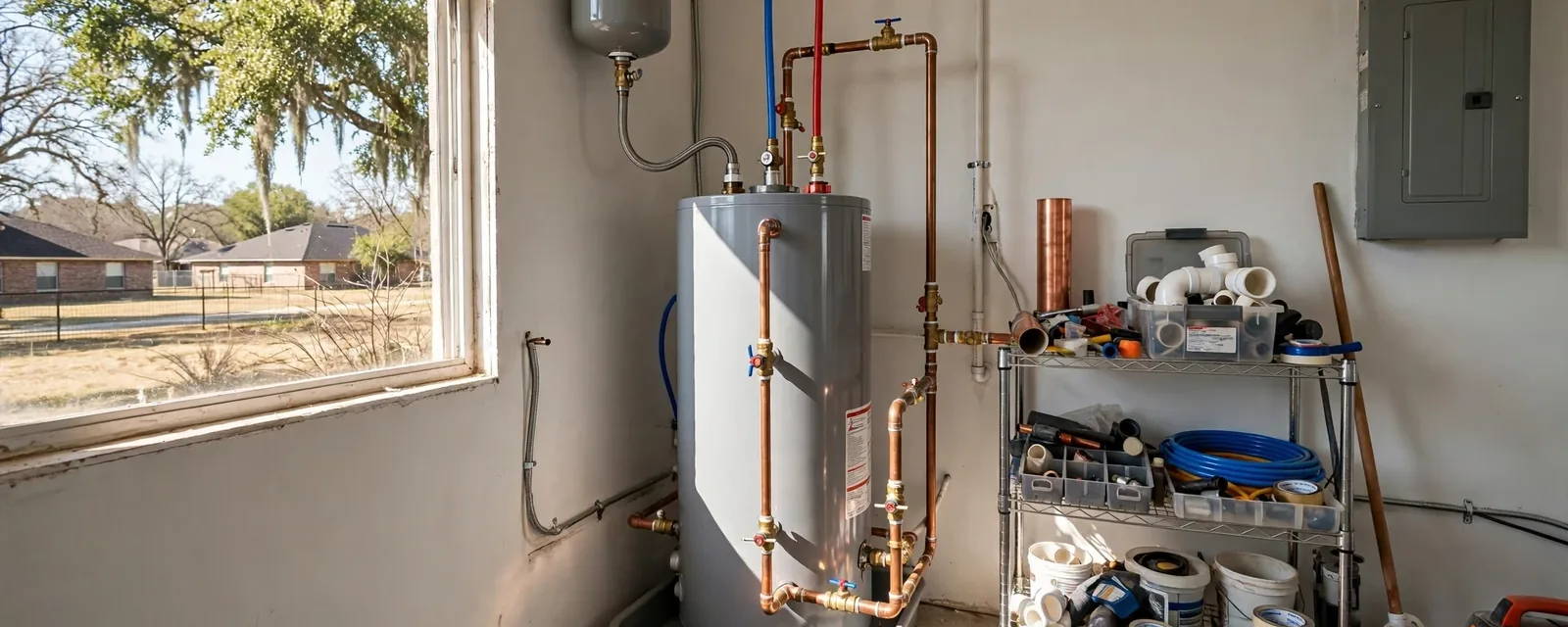
Planning a heater install before the old one gives out
Water heater installation in Shafter, CA means a licensed plumber sets a new heater in a prepared spot, connects water, fuel and venting, adds the safety valves and tests the unit. It suits a remodel, a new build, a move to another fuel or a household that wants to swap before the old tank fails. The calm pace lets you compare types and pick a day.
Most tank heaters last for a limited number of years, and the label shows the age. If yours has begun to leak, you want water heater replacement instead, which is built for urgent swaps. Everything below assumes you can plan.
Decisions to settle before you book the install
Settling these items on the phone speeds up the day itself.
- Fuel. Gas, electric or heat pump, or a change from what you have now.
- Location. Garage, closet, attic or utility room, and whether it needs to move.
- Capacity. The number of people, bathrooms and peak showers or laundry at once.
- Venting and air. Where the flue exits and how combustion air reaches a gas unit.
- Drainage. Where the relief valve discharge, the drain pan line and the condensate line end.
- Permit and access. Ask the Building and Safety Division whether the work needs a permit, and clear a path to the heater.
Planning an install? Call us
Share your household size and fuel and the dispatcher will set up a visit.
What gas, electric and heat pump models each need on the wall
The fuel decides the connections.
| Fuel | What the wall and room need | Honest limit |
|---|---|---|
| Gas | A shutoff, a sediment trap on the line, a flue of the right size and air to burn. Power-vent models need a nearby outlet. | A bad vent path is the most common reason a job grows. |
| Electric | A dedicated circuit, a breaker sized for the unit and a disconnect where required. | New circuits are electrician work, which we do not do. |
| Heat pump hybrid | A power outlet, open air around the unit, clearance above for the fan and a condensate drain. | Taller than a standard tank and cools the room it sits in. |
Sizing a tank by household and why bigger is not always better
Tanks of 40 to 50 gallons are common for many homes, but the right size depends on how many people shower at once and what the heater has to feed. The first hour rating on the yellow label, not the gallon count, tells how much hot water arrives in a busy hour. A large tank in a small closet also loses more heat to standby.
A household of one or two may be fine at the small end, while a family with a soaking tub should ask for a bigger tank or a second source. Our dispatcher can talk through your layout. For a no-tank option, tankless water heater service covers flow rates and gas needs.
How an install day runs from walk-through to the first hot tap
A planned job follows a sequence.
- Walk-throughThe plumber checks the site, the vent path, the shutoffs and the drain, and confirms the plan before touching anything.
- Prepare the spaceA base or platform, a drain pan if called for, and a clear working area.
- Set and levelThe heater is placed, leveled and secured. Ask your installer and the Building and Safety Division what bracing or strapping applies.
- Make the connectionsWater lines, fuel, flue or power, expansion tank, relief valve with a discharge line.
- Fill and fireAir is purged, leaks are checked and the burner or elements are brought up to temperature.
- Walk through the controlsSetpoint, relief lever location and what the dial markings mean.
Garage, closet or attic, moving the heater and adding a recirculation loop
A heater in a garage is easy to service but exposed to dust, vehicles and summer heat, since July highs average about 99 F. A hall closet is tidier but needs a louvered door for combustion air. An attic install needs a pan and a drain line that will not spill into the ceiling.
Moving a heater means rerouting water lines, flue and gas, so it costs more than a swap in place. A recirculation pump and a dedicated return line can shorten the wait for hot water at a far bathroom, and it is a design choice to decide before walls are closed.
New homes and additions raise the same questions at rough-in. For piping around the heater, see plumbing installation, and for homes in McFarland we take the same planned calls.
Permits, bracing and what the California Plumbing Code says
Plumbing in California follows the California Plumbing Code, Part 5 of Title 24, based on the Uniform Plumbing Code. The 2025 edition took effect January 1, 2026. Permit rules vary, so ask the Building and Safety Division at City Hall, open Monday to Friday 8 a.m. to 5 p.m., whether your install needs a permit and inspection.
Ask your installer which items apply to your unit and your house, such as bracing, the pan, the expansion tank and the relief discharge. You can also check any contractor on the CSLB Check A License page, and a plumbing contractor should hold a C-36 license.
What shapes the price of a planned water heater install
We give a clear price before work starts. These factors move it.
- Type and size of heater. A heat pump model costs more than a basic tank, and a large tank costs more than a small one.
- Fuel changes. New gas lines or electrical circuits add parts and labor.
- Venting. A new flue or a power-vent run adds pipe and time.
- Location. Moving the heater means rerouting water, gas and drains.
- Code items. A pan, expansion tank, bracing and permit work each add something.
Standard homeowner insurance does not usually pay for a planned upgrade, so check your policy. Call the dispatcher for the real number.
Planning questions about water heater installation
Which is better for my home, gas or electric?
It depends on what lines you already have and what energy costs in your area. Switching fuel adds work, so many owners stay with what they have.
A heat pump model is worth discussing if you are on electric and have the space.
How big a water heater do I need?
Tanks of 40 to 50 gallons are common, but the first hour rating and your peak use matter more. Count showers, laundry and dishwasher together.
Call and describe your household so the dispatcher can suggest a size.
Can the heater move from the closet to the garage?
Yes, if the plumber can reroute water, gas or power and the vent. It takes more time than a swap in place.
The new spot needs room, air and a safe drain path.
Do I need a permit to install a water heater?
Permit rules vary. Ask the Building and Safety Division at City Hall whether your job needs one.
Your installer should be able to tell you what they pull on similar jobs.
Is a recirculation loop worth adding?
It helps when a far bathroom takes a long time to get hot water, and it is easiest to add when walls are open.
It needs a pump, a return path and sometimes power at the heater.
Ready to plan an install? Call (855) 575-2890 and the dispatcher will set up the visit.