
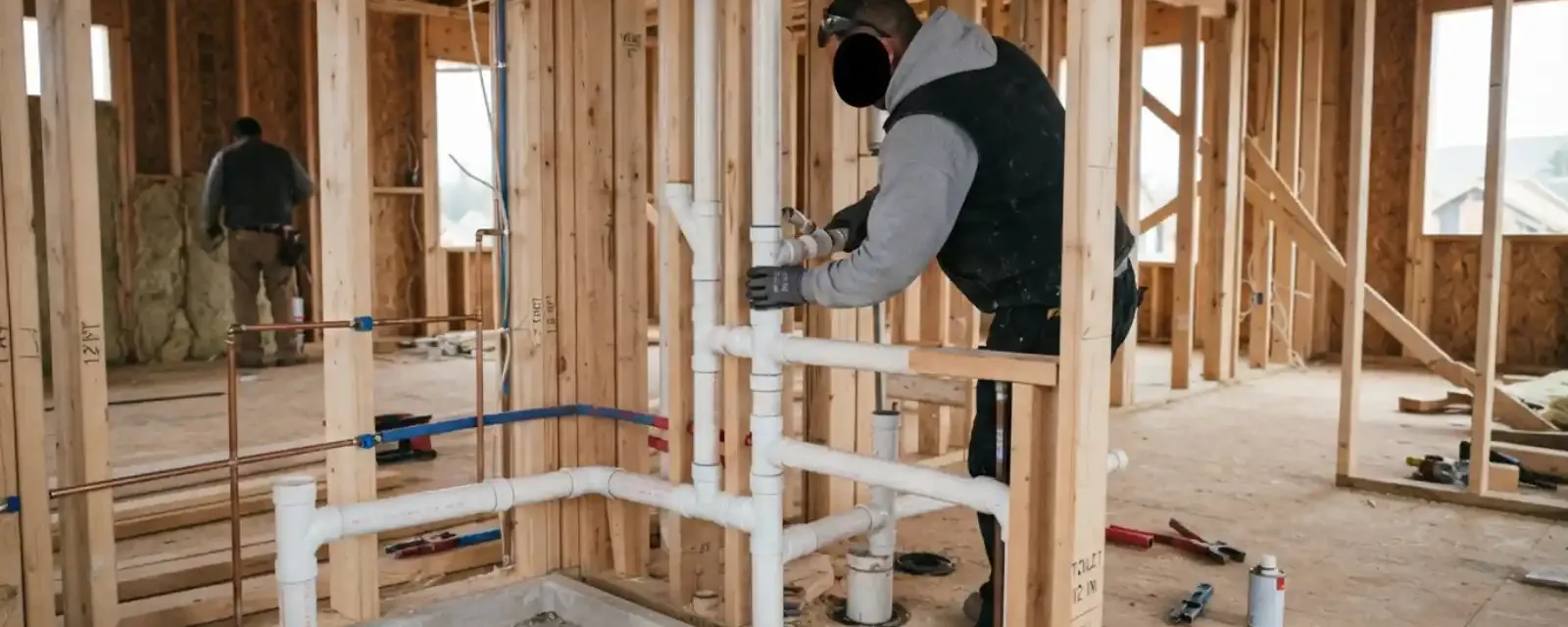
Questions to settle before any pipe is cut
Plumbing installation in Shafter, CA means a licensed plumber adds or relocates fixtures, supply lines and drains, then tests them before the job is closed. Good installs start on paper. Where will the fixture sit, what size are the existing lines and will the drain slope reach the stack? A sink moved three feet may be easy, while a toilet moved across a room can mean cutting into a slab or a joist.
The plumber also checks whether the supply can feed the new fixture. A run with several fixtures already on it may need a larger line or a second branch to keep pressure steady.
Bring the fixture, or at least its spec sheet. Rough-in dimensions, drain size and water connection type decide whether the pipes can be set before you choose a finish. The dispatcher can book a visit that suits your schedule, and same-day appointments are available when the schedule allows.
The fixtures and lines we put in
The list below covers most requests.
- Sinks, faucets and toilets. New kitchen and bath fixtures with fresh angle stops and supply lines.
- Dishwasher and ice maker lines. A dedicated shutoff and a braided supply for the appliance.
- Laundry boxes. A recessed box with hot and cold valves and a standpipe drain.
- Outdoor hose bibs. A frost-resistant bib with a vacuum breaker and its own shutoff.
- Water softener hookups. Bypass valves, a drain connection and tees on the supply.
- Shutoff valves. Quarter-turn valves at each fixture so a repair never needs the whole house off.
- Remodel relocation. Moving a sink or a tub drain to a new wall.
Rough-in, inspection and finish, the order of the work
Most installs follow three stages, and inspection sits between the second and third.
- Rough-inPipes go into the walls or floor before the finishes. Supply stubs and drain stubs are set at the right height.
- Pressure testThe new lines hold air or water pressure, and any drop shows a leak before walls close.
- InspectionIf the job needs a permit, the city inspects the rough-in before drywall covers it.
- FinishFixtures, trim, angle stops and faucets are set after the walls and floors are done.
- Final testThe plumber runs every fixture, checks the drains and looks under the cabinet for drips.
Planning an install? Call to book it
Tell the dispatcher what you are adding and the plumber arrives knowing the parts.
New line, relocation or tie-in, which job is which
The scope changes how much opens up.
| Job | What happens | Honest limit |
|---|---|---|
| Replace a fixture in place | Same stubs and drain, new fixture | Old stops often need replacing too |
| Add a fixture on an existing wall | Tie in to nearby supply and drain | Drain slope and vent distance limit the spot |
| Relocate a sink or tub | New runs and a new drain path | May open walls and floors |
| Appliance supply line | Tee on the line, new shutoff | Needs room behind the appliance |
| Hose bib on a new wall | Run from a nearby supply | Should be insulated against cold nights |
Hard freezes are rare in Shafter, with a record low of 14 F in December, but exposed hose bibs and outdoor lines can still freeze on the coldest nights. A frost-resistant bib and a shutoff inside the house are inexpensive protection.
Fixtures that belong on their own pages
Some installs have deeper detail elsewhere. A new tank heater or a tankless unit brings venting, gas and drain pan questions, covered on the water heater installation page. A cracked toilet that needs a new wax ring and flange is a repair, explained on the toilet repair page.
Kitchen upgrades often combine a faucet, a dishwasher line and a disposal. We handle the plumbing and a standard plug or hardwire connection, and the garbage disposal page explains the grinder side. If old supply lines are the problem, repiping may be the better plan.
New builds, additions and the pump question
New construction plumbing runs in two passes. The first sets drain, waste and vent lines and the supply manifold before walls close, and the second sets the fixtures after finishes. Both passes get tested and, where required, inspected.
For an addition, the plumber ties into the existing supply and finds a drain connection with enough slope. In a flat valley, long drain runs sometimes need a pump instead of gravity, which is why the layout matters early.
Sump and ejector pumps
A sump pump moves groundwater out of a pit, and an ejector pump lifts wastewater from a low bath or laundry to the sewer line. Demand for sump pumps is low in a flat valley like this one, and we do not claim any local flooding problem.
Ejector pumps matter more. A bathroom below the sewer line, a laundry in a garage or a casita with a long drain run can all need one. The plumber sizes the basin, sets a check valve and runs a vent.
Permits and the city inspection
Permit rules vary by job, and this site does not state them. Ask the Building and Safety Division at City Hall whether your project needs a permit. The division issues building permits and does inspections, Monday to Friday 8 a.m. to 5 p.m.
Work follows the California Plumbing Code, Part 5 of Title 24, based on the Uniform Plumbing Code. If you plan a project in Wasco, roughly 10 miles up State Route 43, the Wasco plumbing page lists what we cover there.
What shapes the price of an install
We give a clear price before work starts. These factors move it.
- Scope. A like-for-like swap is smaller than a relocation.
- Access. Open framing is quicker than finished walls or a slab.
- Fixture quality. A premium faucet or wall-hung toilet needs more time and parts.
- Pipe material and run length. More footage and fittings mean more labor.
- Permit and inspection. Rules vary, so ask the Building and Safety Division.
- Who supplies the fixture. Customer-supplied fixtures need a spec check first.
Standard homeowner insurance usually covers sudden damage and not planned upgrades, so check your policy. Call the dispatcher for the real number for your project.
Installation questions from Shafter homeowners
Can I buy my own fixture and have you install it?
Yes in most cases. Send the model details first so the plumber can confirm the rough-in and the drain size.
If a part is missing or the wrong size, we say so before the work starts. Bringing a spec sheet saves a trip, because rough-in height and port size are listed there.
Do I need a permit to add a sink or relocate a line?
Permit rules vary by job. Ask the Building and Safety Division at City Hall whether your project needs one.
If a permit is required, an inspection goes through the city. Inspection, where required, is arranged through the city, and the plumber leaves the rough-in open until it is passed.
Can you install an outdoor hose bib?
Yes. We tie into a nearby supply, add a shutoff inside the house and set a frost-resistant bib with a vacuum breaker.
Insulate the line if it runs through an exposed wall. Ask whether your existing outdoor shutoff is accessible, since that decides how the bib is fed.
Can you hook up a dishwasher or ice maker?
Yes. We add a dedicated shutoff and a braided supply line, and connect the dishwasher drain to the disposal or an air gap.
We do not run new electrical circuits. The licensed electrician handles any new outlet or circuit the appliance needs.
Do I need an ejector pump in my addition?
Only if the new fixtures sit below the sewer line or the drain run is too flat for gravity. The plumber checks the slope first.
Sump pumps are less common here because the valley is flat. A flat site with an old drain may also need a vent upgrade, so the plumber checks that early.
What affects the cost of a plumbing install?
Scope, access, fixture quality, pipe length and permit needs all matter.
Call for a clear price before work starts. A like-for-like swap is simpler than a relocation. Fixture choice, pipe length and inspection needs can each shift the final figure.
Have a project in mind? Call (855) 575-2890 and the dispatcher will line up a plumber.