
Before you buy, dig or keep paying for clogs, look inside
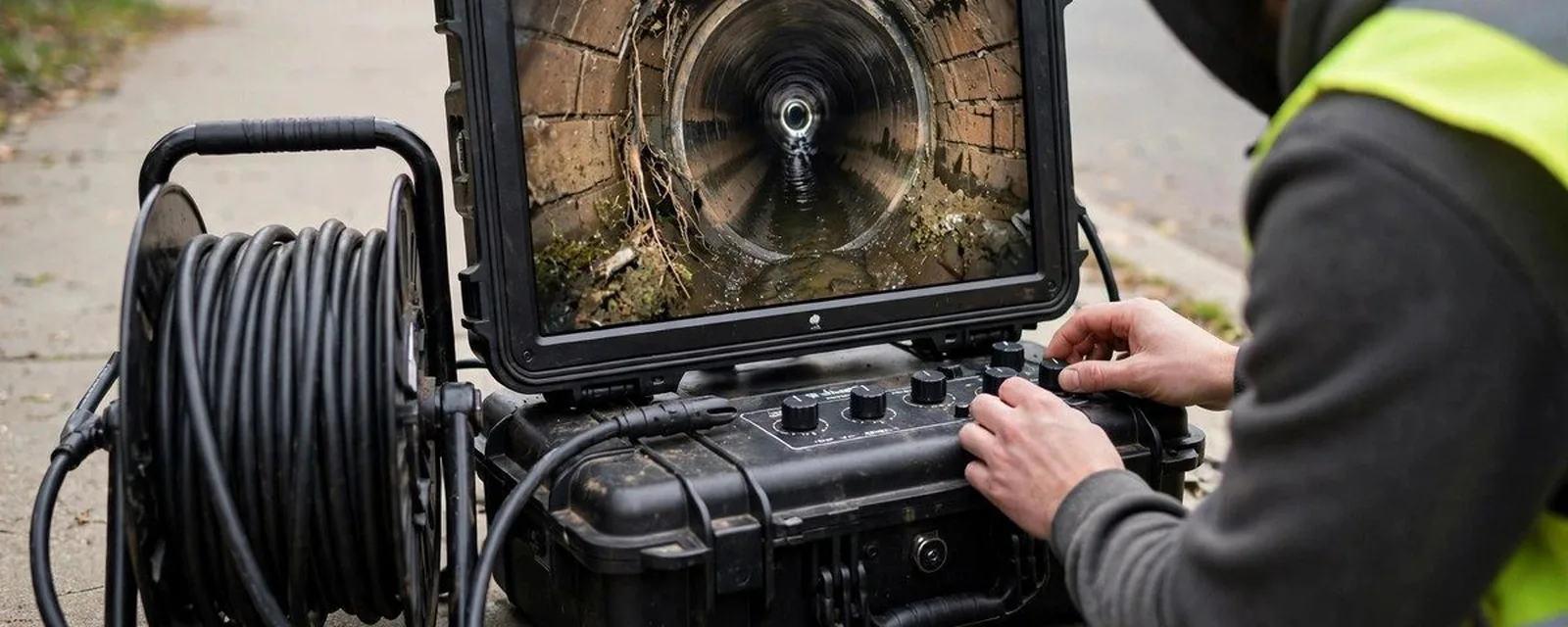
A sewer camera inspection in Shafter, CA sends a waterproof camera head down your sewer lateral on a flexible rod and records what the pipe looks like. It replaces a guess with a picture. It suits a home purchase, a line that keeps clogging, or any job that involves digging in the yard.
Buyers get the most from it. A home inspector checks fixtures and visible plumbing, but the pipe under the yard stays out of sight. Scoping the line during the inspection period shows roots, a bellied section or a cracked joint while you can still negotiate a repair or walk away. Older homes are the strongest case, though any house can hide a bad lateral.
Owners use it too. A line that backed up twice in a year deserves a look, and so does a line that was just cleaned. Buyers and owners in Wasco can book the same scope visit by phone, roughly 10 miles up State Route 43 from Shafter.
How the camera gets into the pipe
This is a planned visit, so the pace is calm and the plumber narrates what the screen shows.
- Find the entryThe plumber locates the cleanout. With none, the camera goes in through a pulled toilet or a roof vent, and we may suggest installing a cleanout.
- Clear loose debrisIf the pipe is packed, the line is cabled or jetted so the lens can see. Cleaning is a separate step and a separate cost factor.
- Push the cameraA self-leveling color camera on a push rod travels toward the street connection. Its lights show the wall and a counter shows the distance.
- Locate with the sondeA small transmitter called a sonde sits behind the camera head. A receiver above ground finds it, and the plumber marks position and depth.
- Record the runThe video is recorded with notes on where each defect sits along the line.
What roots, offsets, bellies, cracks and scale look like on screen
Each defect has a look. These are the ones that matter most.
Roots
Fine white or brown threads at a joint, or a thick mat that fills the pipe. They enter where the seal has failed, so the joint is the real defect.
Offset joint
The pipe ends do not line up, and the picture drops or shifts at the joint. Paper and debris catch on the lip.
Belly
A sag where water sits. The camera goes partly under water and the pipe beyond cannot be seen. Waste settles in the dip and causes repeat clogs.
Crack or break
A dark line along the pipe, or a gap with soil showing through. Clay and cast iron crack in different patterns.
Scale and grease
A rough crust on cast iron, or a waxy coat on the wall that narrows the bore.
Ready to book a scope? Call the line
Tell the dispatcher what you want checked and when the line last backed up.
Reading the video without a pipe background
A recording looks confusing until you know three things. The counter shows distance from the entry. The view always faces forward. Standing water hides the pipe, so a section under a belly goes unseen.
The plumber should tell you the pipe material, where each defect sits and how serious it looks. A single root at one joint is a very different finding from a cracked pipe with soil showing. Ask for the severity and the fix options, and a clear price before any work starts.
A scope shows condition. It does not prove a repair is needed, and it does not commit you to one. The camera cannot measure wall thickness, and a quick pass can miss a hairline crack. If the findings matter to a purchase, ask to see the whole recording and not a summary.
Camera, dye, smoke or water test, what each one shows
The camera is usually first, and the other tests fill gaps.
| Method | What it shows | What it misses |
|---|---|---|
| Push camera | The inside of the pipe, including joints, roots, bellies and breaks | Pipe under standing water, or past a blockage it cannot pass |
| Dye in a fixture | Whether water reaches a suspected outlet or leak point | The condition of the pipe along the way |
| Smoke test | Cracks or openings that let smoke escape, and stray connections | Defects with no path to the surface |
| Hydrostatic test | Whether a plugged section holds water | Where the leak sits when it fails |
For most homes the camera comes first, because it shows both the cause and the location.
Locating the line and marking depth
Many owners do not know where their sewer line runs. The sonde on the camera head sends a signal, and a locator above ground reads its position and depth. The plumber marks the spot with paint, flags or chalk and notes where the line bends.
That mark helps with a repair estimate, a landscaping plan or a fence post. It is not a substitute for a utility locate. Call 811, the Underground Service Alert number, before any digging, because other lines run through the same yard.
After jetting, and when a line clogs again and again
A camera pass after cleaning is how you know the job worked. If we have just cut roots with sewer line cleaning or washed a grease-coated pipe, the second look shows a clean wall and any defect that buildup hid.
A line that clogs from a belly or an offset keeps clogging. Pairing a scope with hydro jetting clears the line and shows what remains, though we look before we jet so the water does not hit a weak spot.
When the video shows a defect cleaning cannot fix, sewer line repair lays out spot repair, lining and replacement. We discuss options after you have seen the video, not before.
What affects the cost of a camera visit
You get a clear price before work starts. These factors move it.
- Access. A cleanout makes the run simple. Pulling a toilet to reach the line adds work.
- Length of the line. A long lateral to the street takes more time than a short one.
- Cleaning first. A packed pipe must be cleared before the lens can see, which adds a step.
- Locating. Marking position and depth above ground takes extra time and a locator.
- Recording and notes. A detailed recording with defect notes takes longer than a quick look.
- Hour of the visit. A planned weekday slot is priced differently from an after-hours call.
Standard homeowner insurance usually covers sudden damage and not wear, so check your policy before assuming a scope is covered. Call the dispatcher for the real number.
Sewer scope questions answered
Should I scope the sewer line before buying a house?
It is a smart step, especially for an older home. The pipe under the yard is out of sight during a regular home inspection.
A scope during the inspection period shows roots, bellies and cracks while you can still negotiate or walk away.
Do I need a cleanout for a camera inspection?
No, but it helps. Without a cleanout the camera goes in through a pulled toilet or a roof vent, which takes more time.
If the house has no cleanout, we may suggest installing one.
Can you find where my sewer line runs?
Yes. A sonde behind the camera head sends a signal and a locator above ground marks position and depth.
Call 811 before any digging, because other lines may share the yard.
Will the camera fix my clog?
No. A camera looks and records. It does not clear a blockage.
If the line is packed, we cable or jet it so the lens can see, and that is quoted as a separate step.
Does the video prove I need a new sewer line?
Not by itself. A scope shows condition, and many defects can be fixed with a spot repair or lining.
Ask for the whole recording and the repair options, and compare before committing to anything.
What affects the cost of a sewer camera inspection?
Access, line length, whether cleaning comes first, locating and the hour of the visit all matter.
Call for the clear price before work starts. A detailed recording with notes takes longer than a quick look.
Want to book a scope or ask what it covers? Call (855) 575-2890 and the dispatcher will set it up.