
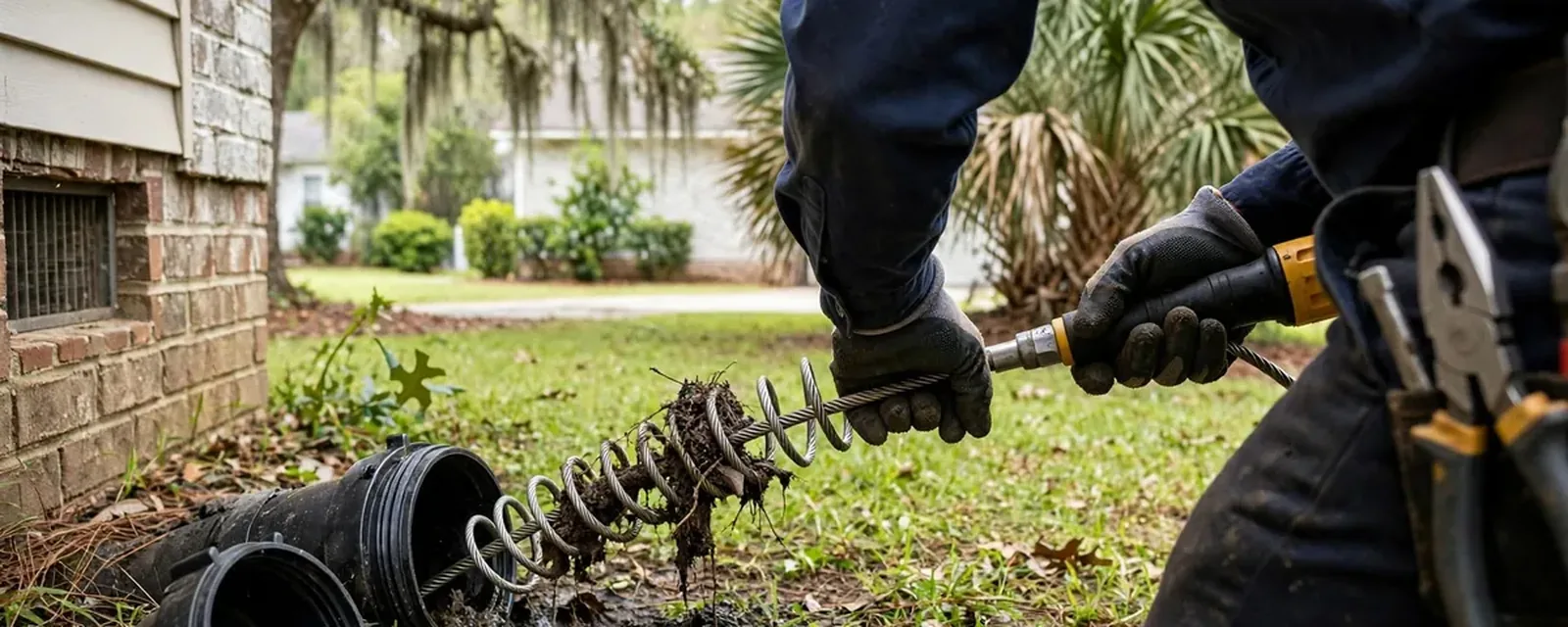
Why a jetting quote is a range of variables
Sewer hydro jetting in Shafter, CA is billed by the job, not by a flat rate for every line. That is not a dodge. The same truck, hose and crew can spend forty minutes on one lateral and most of an afternoon on another.
A plumber prices the time on site, the equipment used, the risk to the pipe and the chance the first pass does not finish the job. Understanding those pieces lets you compare quotes fairly instead of picking the lowest number and hoping.
This guide covers factors only. We do not publish figures, because a number quoted without seeing the line is a guess.
The six factors that move a sewer jetting price
Most quotes come down to these. The first three are about your pipe, and the last three are about how the work is done.
- Distance to clear. A cleanout near the house with a short run to the street takes less hose and less time than a long lateral or a branch that runs under a garage.
- Pipe diameter and material. A 4 inch lateral calls for a different hose and nozzle than a 6 inch main. Fragile material slows the operator down.
- What coats the wall. Soft grease washes off in a pass or two. Hardened scale, mineral crust and thick root mats need repeated passes.
- Access to the line. A cleanout makes the job direct. With none, the plumber may need to pull a toilet or install a cleanout first.
- Camera work. A recorded look before and after adds a step and a record, and it tells you whether the line is safe to jet.
- Timing of the call. A weekday slot you can plan differs from an overnight backup, when a crew is pulled out of its normal schedule.
Not every job touches all six. A short, accessible kitchen line with soft grease may involve only two or three.
How buildup type changes the hours on site
Jetting time depends on what the water is fighting. Fresh grease behaves like warm candle wax and strips quickly. Old grease that has cooled and mixed with soap and flour is tougher and may need slow passes with a rotary nozzle.
Mineral scale inside older iron is a different problem. It builds in rough nodules that catch paper and trap waste, and a descaling head works through it gradually. The line may look clean after the first pass and still need another to reach full bore.
Roots are the third case. They need a cutting head first so the water can flush the pieces, and a heavily rooted line adds time, a second cutter and often a follow-up visit.
Ready to price your own line?
Call the line and our dispatcher will book a licensed plumber and explain the price before work starts.
Quoting scenarios side by side
These are typical situations and how each tends to affect the final price. They show direction, not amounts.
| Situation | Effect on cost | Why |
|---|---|---|
| Short kitchen branch with a cleanout | Lower side | Little hose, one or two passes, easy access |
| Main lateral with moderate grease | Middle | More footage and a camera check |
| Long lateral with heavy roots | Higher side | Cutting plus jetting plus a follow-up look |
| No cleanout on the line | Adds a step | Pulling fixtures or installing access takes time |
| Midnight backup | Priced for after-hours work | Crew and truck called out of schedule |
| Line that needs jetting every few months | Plan for a different fix | Repeating the same job points to a defect |
The last row matters most. Paying for the same cleaning several times a year usually costs more than finding and fixing the reason.
Where the camera pays for itself
A camera visit looks like an extra line item, but it often prevents a bigger one. If the recording shows a crack or a collapsed section, blasting water down that pipe wastes your money and may widen the damage.
The recording also settles arguments. It shows the plug you were told about, the clean wall afterward and any defect that remains. If you ever need to talk to a landlord, a buyer or an insurer, you have evidence.
Our hydro jetting service includes this look as part of how the work is planned, and you can see what the video reveals on the sewer camera inspection page. Sewer work is governed by the California Plumbing Code, which is based on the Uniform Plumbing Code (UPC).
What to do before you accept a low jetting quote
The biggest trap is a cable run priced low on a line that really needs a jet. The cable pokes a hole through the stoppage, the grease ring stays, and you call again within weeks. Two cable visits can add up to more than one proper cleaning.
The second trap is a quote that does not mention the camera or says nothing about what happens if the pipe is damaged. Ask whether the price covers a recorded inspection and what the plan is if the line is not safe to jet.
The third is a vague quote. A fair estimate names the line, the method and what is included. Ask for the clear price before work starts, which is how we handle it.
Insurance and who pays for what
Homeowner policies usually cover sudden and accidental damage and not wear or gradual buildup. A grease clog from years of use is generally maintenance, not a covered event. Some policies add sewer backup coverage as an extra, so check your policy and ask your agent before assuming either way.
Rental situations differ. A tenant who caused a clog with wipes or grease may be responsible, while a root-invaded lateral is usually the owner's problem. Settle that before the plumber arrives if you can.
Planned maintenance versus a rescue visit
A line jetted on a schedule is cheaper to keep open than one rescued at 2 a.m. The crew arrives in daylight, the cleanout is clear and the plumber has time to camera the pipe. Nothing is flooding, so nothing is rushed.
How often depends on the line. A busy kitchen drain may want service every few months, while a quiet residential lateral with no history may never need it. The camera record from the last visit is the best guide to the next interval.
If a house line needs jetting more than once a year, treat that as a symptom. Roots at a joint, a bellied section or a worn pipe wall will keep refilling the line until someone repairs the cause.
Commercial kitchens and shared lines around Shafter
Shafter has restaurants, food prep spaces and shops across its retail and industrial areas, and any kitchen that sends fat down a drain faces the same pattern. Grease builds, flow slows and the line jams at the busiest time. For these properties jetting is often scheduled maintenance, not a one-time fix.
Ask City of Shafter Utility Services about its expectations for grease handling at food businesses, since the city provides the sewer service and rules vary by type of use. The Building and Safety Division can tell you whether a trap or interceptor change needs a permit. Regular service on a set interval costs less than an emergency closure.
Source type: City of Shafter Utility Services and Building and Safety Division pages
Jetting price questions from Shafter callers
Why can't you give a fixed jetting price over the phone in Shafter?
The dispatcher can explain the factors, but length, access and what is in the pipe are unknown until a plumber sees the line. A number given blind would be a guess.
Once the plumber looks, you get a clear price before work starts and you decide whether to go ahead.
Does a commercial jetting job cost more than a home job?
Often it does, since commercial lines tend to be longer, larger and heavier with grease. Access through floor drains or traps can also add steps.
Our commercial plumbing team can plan after-hours work so your kitchen stays open.
Is it cheaper to just snake the line again?
For a one-time hair or paper clog, yes. For grease or scale, the cable leaves the coating behind and the clog returns.
If you have already snaked the same drain more than once, ask about jetting or a camera look.
Will insurance pay for a jetting visit?
Usually not for routine buildup, since policies tend to treat it as maintenance. A sudden backup caused by a covered event may be handled differently.
Check your policy language and ask your agent if you are unsure.
Can I save money by jetting only part of the line?
Sometimes, if the camera shows the blockage is confined to one section and the rest is clean. Clearing only the visible plug can leave the real problem downstream.
The camera helps decide how much of the line is worth treating.
Want the factors applied to your own line? Call (855) 575-2890 and a licensed plumber will go through them.