
What a slab leak is and why it hides
A slab leak is a break in a water pipe that runs beneath or inside a concrete foundation. Any home in Shafter, CA built on a concrete slab can have supply lines, and sometimes drain lines, running below the floor where nobody can see them.
The leak may be a pinhole in a pressurized supply line or a joint that has worked loose. Water escapes into the gravel and soil under the concrete, then spreads. It often shows itself only when the bill rises or the floor feels wrong.
Because the evidence sits under the floor, the job is first to confirm a leak exists and then to find exactly where. Guessing leads to broken concrete in the wrong place.
Clues you can check without tools
None of these proves a slab leak on its own. Two or three together make it likely.
- A warm or hot patch on the floor. A leaking hot line can heat the slab above it. Walk barefoot over tile or concrete and note where it feels warm.
- The sound of running water in a quiet house. With every fixture off, listen near walls and floors for a faint hiss.
- A water meter that moves with everything off. Watch the leak indicator on the meter after turning off all water use.
- Damp carpet, lifted flooring or cracked tile. Moisture under a slab can push flooring up or leave a musty smell.
- Low pressure at the taps. A large leak steals pressure from the system.
- Moisture at baseboards or the foundation edge. Water may track to the lowest or weakest point.
Hot summers help here. With July highs around 99 F, a warm spot in a floor is easy to blame on the sun, so check for it at night with the cooling running.
A meter test that separates a leak from a habit
Do this before you call, so you can tell the dispatcher what you found.
- Shut off every fixtureClose taps, stop the dishwasher and washer, and make sure no one flushes. An ice maker line counts as water use.
- Locate the meterLift the meter box lid. Use a flathead screwdriver, since lids can be stubborn.
- Read the leak indicatorMost meters have a small triangle or dial that spins when any water flows. If it moves with everything off, water is going somewhere.
- Write down the dialNote the numbers, wait an hour with no use, and read again.
- Close the house mainIf the meter stops, the leak is inside the house. If it still moves, it is between the meter and the house shutoff.
Hearing water that nobody is using?
Call the line and our dispatcher will book a licensed plumber with leak locating gear.
How a plumber pinpoints it before opening anything
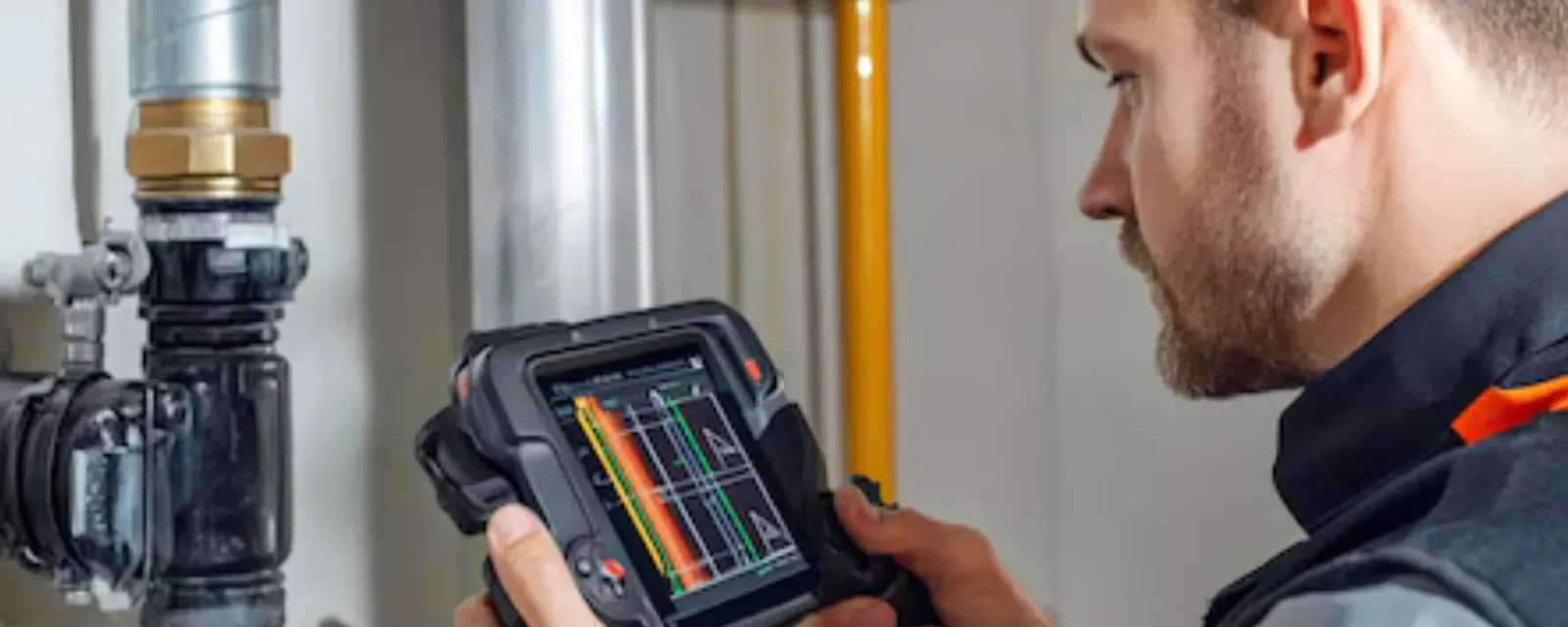
Pinpointing uses several methods in combination. A pressure test isolates the supply lines and shows whether pressure drops. A listening device picks up the noise of escaping water through the slab, and the plumber moves it in a grid until the sound peaks.
Thermal imaging shows warm streaks in the floor from a leaking hot line. A tracer gas, safe and non-toxic, can be pushed through a drained system and detected at the surface. Our leak detection service uses these tools to mark the spot so repairs stay small.
The aim is a mark on the floor within a few inches. Without it, a repair crew may cut a trench twice as long as needed.
Repair paths and what each means for your floor
Once the leak is located, you have more than one choice. The right one depends on the pipe, the location and your plans for the house.
| Option | How it works | Trade-off |
|---|---|---|
| Spot repair through the slab | Cut the concrete, expose the pipe and fix the break | Direct and common, but it means a hole in the floor |
| Reroute through walls or attic | Abandon the bad line and run a new one overhead | Avoids concrete, but opens walls and ceilings |
| Pipe lining or epoxy | Coat the inside of the pipe | Less demolition, not suitable for every pipe |
| Repipe the house | Replace the full supply system | Best where leaks keep recurring, bigger job |
| Monitor only | Watch the meter and wait | Rarely wise, because leaks seldom stop on their own |
Our slab leak repair page walks through each choice and when it fits.
Steps to take while you wait for the plumber
If you are fairly sure of a leak, find the main shutoff valve, usually near the street side of the house or at the water heater, and close it for the night. Open one tap to relieve pressure. This stops the loss without harming anything.
Turn off the water heater's heat source too if the house will have no water for long, since a tank that cannot refill should not keep heating. Move rugs and furniture off any damp flooring and photograph the area for later.
Do not drill or chip at the slab to look for the pipe. A cut in the wrong place can hit another line.
Questions worth asking before anyone cuts concrete
Ask how the leak will be confirmed and what tools will pinpoint it. Ask whether the plumber will mark the floor and show you the mark before cutting. A vague answer suggests a trial and error approach.
Ask what the repair options are for your pipe and floor, not only the one the crew prefers. Ask who patches the concrete and the flooring afterward, because many plumbers restore the slab but leave tile or carpet to a flooring contractor.
Why a small leak under concrete is not a wait-and-see problem
Water under a slab can wash out soil and weaken support. It can also raise humidity, feed mold under flooring and push up the slab edge over time. A tiny leak runs around the clock, so the loss adds up on the water bill and in the foundation.
Hot water leaks are more urgent, since they also waste energy. If you smell sewage or see wet spots after rain, the leak may be in a drain, not a supply. A camera inspection then tells which.
The practical move is to find it early. The earlier you locate it, the more repair choices you keep.
Insurance and the paperwork around a slab leak
Homeowner policies generally cover sudden and accidental water damage and may not cover the pipe itself when it failed from age or corrosion. Many policies exclude or limit slab leak coverage, and the wording varies. Check your policy, then ask your agent before work starts.
Keep records. Photos of damp areas, the meter readings from your test and the plumber's report all help a claim. Ask for a written description of where the leak was found and how it was confirmed.
Permits and inspection for slab work in Shafter
Cutting into a slab or rerouting supply lines can be a permitted job, and permit rules vary with the scope. Before the work starts, ask the Building and Safety Division at City Hall whether your repair needs a permit and an inspection. The division issues building permits and performs inspections on weekdays.
Plumbing work in California follows the California Plumbing Code, Part 5 of Title 24, and the 2025 edition took effect January 1, 2026. A licensed plumbing contractor holds the C-36 classification, which you can verify on the CSLB Check A License page.
Source type: City of Shafter Building and Safety Division, California Building Standards Commission and CSLB
Under-floor leak questions asked before a locator visit
Can I tell if I have a slab leak without a plumber?
You can gather strong clues. A moving meter with all water off, warm floor spots and running water sounds all point that way. The meter test above takes about an hour.
Only a plumber with listening and thermal equipment can confirm and locate it.
Does a Shafter slab leak mean I must tear out my floor?
Not always. Precise locating limits the opening, and rerouting a line through a wall can avoid concrete entirely.
The right path depends on the pipe location, the flooring and your budget.
How long can a slab leak go unnoticed?
Months, sometimes longer, since the water drains into soil and leaves little surface evidence. A rising water bill is often the first sign.
If you suspect one, do the meter test now rather than waiting.
Is a leak under the slab an emergency?
If water is pooling, the floor is heaving or you cannot stop the flow, shut off the house main and call. The dispatch line runs 24/7.
A slow leak is still worth locating promptly, and same-day appointments are available when the schedule allows.
Think water is running under your floor? Call (855) 575-2890 and a licensed plumber will test the lines.