
A bill that jumps without a reason
A high water bill is a utility charge that is larger than your normal use would explain. For a household in Shafter, CA the cause is often a leak you cannot see or hear. A running toilet, a broken sprinkler line or a cracked service pipe can waste a great deal of water around the clock.
The good news is that your water meter is a ready-made diagnostic tool. It counts every gallon that passes through, and it keeps counting when nobody is home. A few minutes at the meter can tell you whether the water is going through your plumbing or simply through a busy household.
Start there before you replace fixtures at random or assume the bill is wrong.
The ten minute meter test, step by step
Do this when nobody will use water for a short stretch. Early morning or a quiet afternoon works well.
- Stop every use of waterTurn off the dishwasher, washing machine, ice maker if you can and irrigation controller. Make sure nobody flushes or runs a tap.
- Find the meter boxIt is usually near the curb or property line, under a lid. Lift it carefully with a screwdriver and watch for insects or spiders.
- Read the low flow indicatorMany meters have a small triangle or dial that spins at the slightest flow. If it turns with everything off, water is moving somewhere.
- Write down the dial readingNote the digits, then wait fifteen to thirty minutes without using water. Read it again.
- CompareAny change means a leak. A steady slow turn suggests a small leak, while a fast spin suggests a larger one.
If the indicator is still, your house side is probably tight at that moment. The high bill may come from irrigation, a seasonal pattern or use you have forgotten.
Toilets, the silent water thief
A toilet is the most common source of a hidden household leak. A worn flapper lets water seep from the tank into the bowl, and the fill valve then tops it up again. You may hear nothing at all.
Put a few drops of food coloring in the tank and wait twenty minutes without flushing. If color shows in the bowl, the flapper is leaking. Also look at the overflow tube. If the water level sits above the tube, the fill valve is the problem.
A flapper is a small, inexpensive part, and replacing it is a reasonable DIY job. Shut the angle stop first, and drain the tank before you work.
Meter still running with everything off?
Call the line and our dispatcher will arrange a licensed plumber to track the leak.
Irrigation, hose bibs and outdoor taps
A sprinkler zone with a cracked riser or a stuck valve can run unnoticed, especially if it waters a back corner of the yard. Walk the zones during a cycle and look for geysers, pooling or a patch that stays soggy.
Check hose bibs for a drip at the spout or at the handle stem. A hose left running with a nozzle off is another quiet source. In a place where July highs average about 99 F, summer watering is already heavy, so a small leak can hide inside the normal peak.
Close the irrigation supply valve and repeat the meter test. If the indicator stops, the problem sits in the outdoor system and not under the house.
What the meter and the clues point to
Use this to decide your next move. Combine the meter result with what you can see and hear.
| What you notice | Likely source | First move |
|---|---|---|
| Meter spins with everything off | A leak somewhere on the house side | Close the main valve at the house and test again |
| Meter stops when the main valve closes | A leak inside the house or yard after the main | Check toilets, then call for leak detection |
| Meter keeps moving with the house valve closed | A leak between the meter and the house valve | Call a plumber and contact the City of Shafter utilities |
| Meter stops with irrigation off | A sprinkler or drip line problem | Walk the zones, repair the leaking riser |
| Warm spot on a floor | A hot water line under the slab | Call quickly, since hot lines wear fast |
| Wet patch or sinking soil near the meter box | A buried service line or a fitting | Mark the area and call a plumber |
Reading the pattern on past bills
Pull out the last several bills and line them up. A sudden jump in one cycle often means a break or a stuck valve. A slow climb across many months points to a small leak that has grown, such as a toilet flapper wearing out or a pinhole in a buried line.
Seasonal swings are normal when the yard is watered more in hot months. Compare this summer with the last one. If the increase is out of step with your watering and your household size, treat it as a leak until the meter test says otherwise.
Keep the dates of any repairs you make. When the next bill drops after a fix, you will know whether the fix worked.
Water heater and indoor lines
A water heater can leak at its relief valve or its fittings and add to the bill without a visible puddle if it sits on a drain pan. Look inside the pan and touch the pipes above the tank for dampness.
Check under sinks and behind the washing machine. A slow drip at an angle stop or supply line can soak a cabinet floor for weeks. Run a dry paper towel along the connections, and any damp spot is a clue.
Listening can help. In a quiet house, place your ear against a wall near the bathrooms and the kitchen. A faint hiss or a trickle is a reason to keep looking.
When the leak is under the house or in the yard
If the meter moves and every fixture is clear, the leak is probably in a buried line. Water pipes under a slab or in the yard cannot be seen, and a wet patch above them may show up only after the damage is well along.
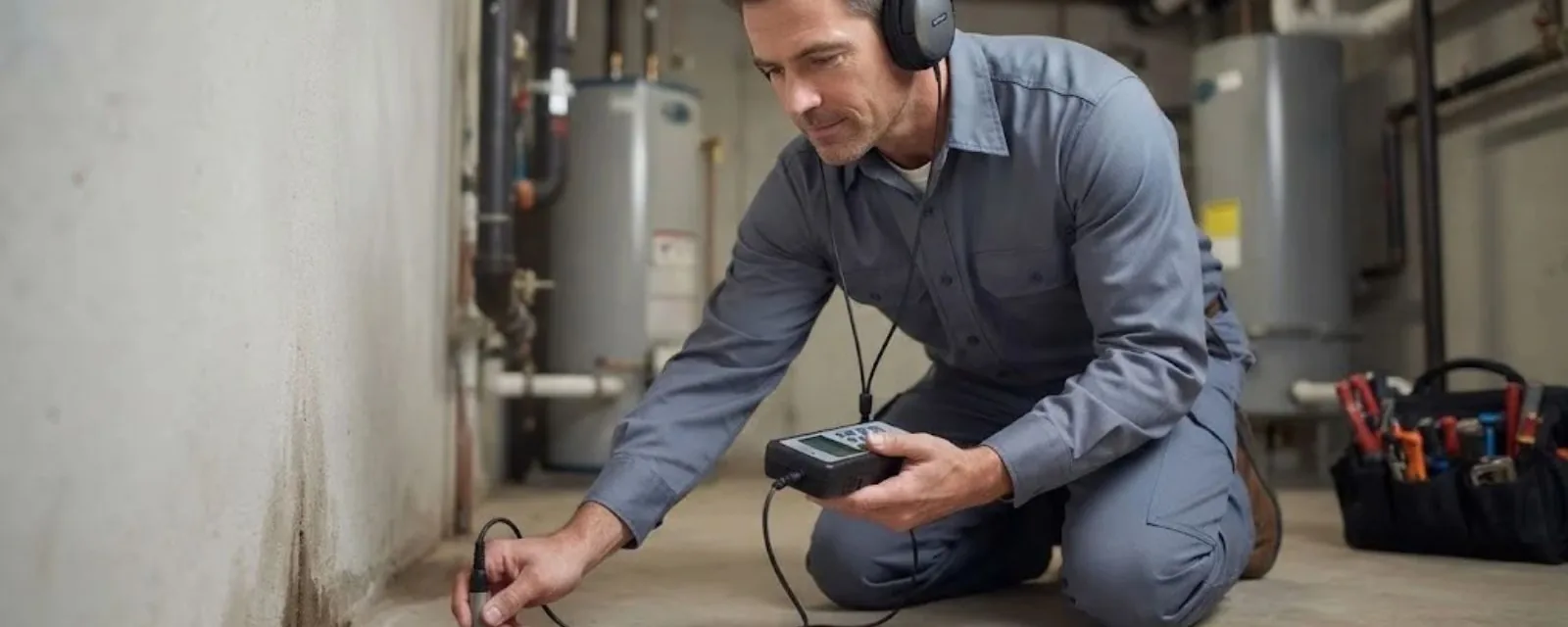
Plumbers use a method called acoustic listening to hear the leak through the ground, plus a pressure test and thermal imaging when a hot line is suspected. Our leak detection service uses these methods to locate the leak before any digging begins.
If the leak is on the pipe from the meter to the house, our water line repair work covers the fix, from a spot repair to a full replacement. A hot floor or a sound of rushing water inside the home can also point to slab trouble.
Safety and shutoff while you investigate
If water is flooding a room, close the main shutoff valve at the house and turn off the power to wet areas at the breaker. Do not stand in water near outlets or appliances.
Take photos of damage and of the meter reading. Those notes help a plumber and help if you speak with your insurance company later. Standard homeowner coverage often focuses on sudden damage rather than long term wear, so check your own policy.
Your Shafter utility bill and who to call
The City of Shafter provides water, sewer and trash service to residential and commercial customers. Utility billing is handled by the Finance Department. If your bill looks wrong, contact the City of Shafter Utility Services about your bill and ask how the reading was taken.
Ask where the city side of the line ends, because a leak on the city side is not yours to repair. Bring your meter reading and the date of your test. It gives the staff something concrete to check.
Source type: City of Shafter Utility Services and Finance Department pages
Quick fixes you can try yourself
These are low risk and cheap, and they rule out the common causes.
- Replace a leaking flapper. Match the shape and size to the old one.
- Adjust the fill valve. Lower the float so water stops below the overflow tube.
- Tighten a dripping hose bib packing nut. A quarter turn is often enough.
- Swap a worn supply line. A braided stainless line is a common choice.
- Reset irrigation run times. Set the controller to match the season.
Do not dig for a buried line or cut into a wall guessing. Those jobs deserve a locator and a plan.
When to stop testing and call
Call a plumber if the meter spins with the house valve shut, if a floor is warm, or if soil sinks near the line. Also call if you cannot find the cause after the checks above.
Our dispatcher also takes calls from Wasco, roughly 10 miles from Shafter, and McFarland, roughly 15 miles away. To describe your meter test, Call (855) 575-2890 and a licensed plumber can be arranged.
Common questions about a running meter
Who do I call about a high water bill in Shafter, CA?
Contact the City of Shafter Utility Services about your bill. If the meter moves with your house valve closed, also ask where the city side of the line ends. A plumber can then check your side.
Can a toilet cause a high bill?
Yes. A flapper that leaks lets water trickle all day. Use the dye test in the tank and check the overflow tube.
Is the meter reading ever wrong?
It can be, but a leak is far more likely. Do the meter test and share the readings with the utility.
Will a leak always show on the ceiling or floor?
No. Buried and slab lines can leak for a long time with no visible sign. The meter is the best early clue.
Does homeowner insurance pay for a leak?
Usually it focuses on sudden damage rather than wear. Check your policy and ask your insurer.
If the meter will not stop, Call (855) 575-2890 and our dispatcher will arrange a licensed plumber.