
Read the pattern before you grab the plunger
A clogged drain in Shafter, CA is a partial or full blockage that slows or stops water leaving a sink, tub, toilet or floor drain. Finding the cause starts with a simple question. Is it one drain or several?
One slow fixture usually means a problem in that fixture's own trap or branch. Two or more slow fixtures, or a gurgle in one when another drains, points to the shared line downstream. That difference decides whether a plunger and a small drum auger will do, or whether you need the main line cleared.
Timing helps too. A drain that slows over weeks is coating up. One that stops overnight is blocked by something solid.
Kitchen sinks and the grease problem
Kitchen drains clog from fat, oil and food. Hot grease flows easily, then cools in the pipe, sticks to the wall and catches coffee grounds and starch. Each wash adds a layer until the bore is a fraction of its size.
Rice and pasta swell in the trap. Eggshells and fibrous scraps bind with grease into a plug. Even with a garbage disposal, ground food still has to travel through the same narrow pipe.
A wipe of pans with a paper towel before washing helps more than any hot water flush. If a kitchen line backs up repeatedly, the drain cleaning team can cable it and decide whether a jet is the better tool.
Bathroom sinks and tubs, hair and soap
Hair is the usual culprit in tubs and showers. It tangles around the stopper linkage or the strainer and mats with soap scum. Bathroom sinks are similar, with toothpaste, shaving residue and lotion adding to the mix.
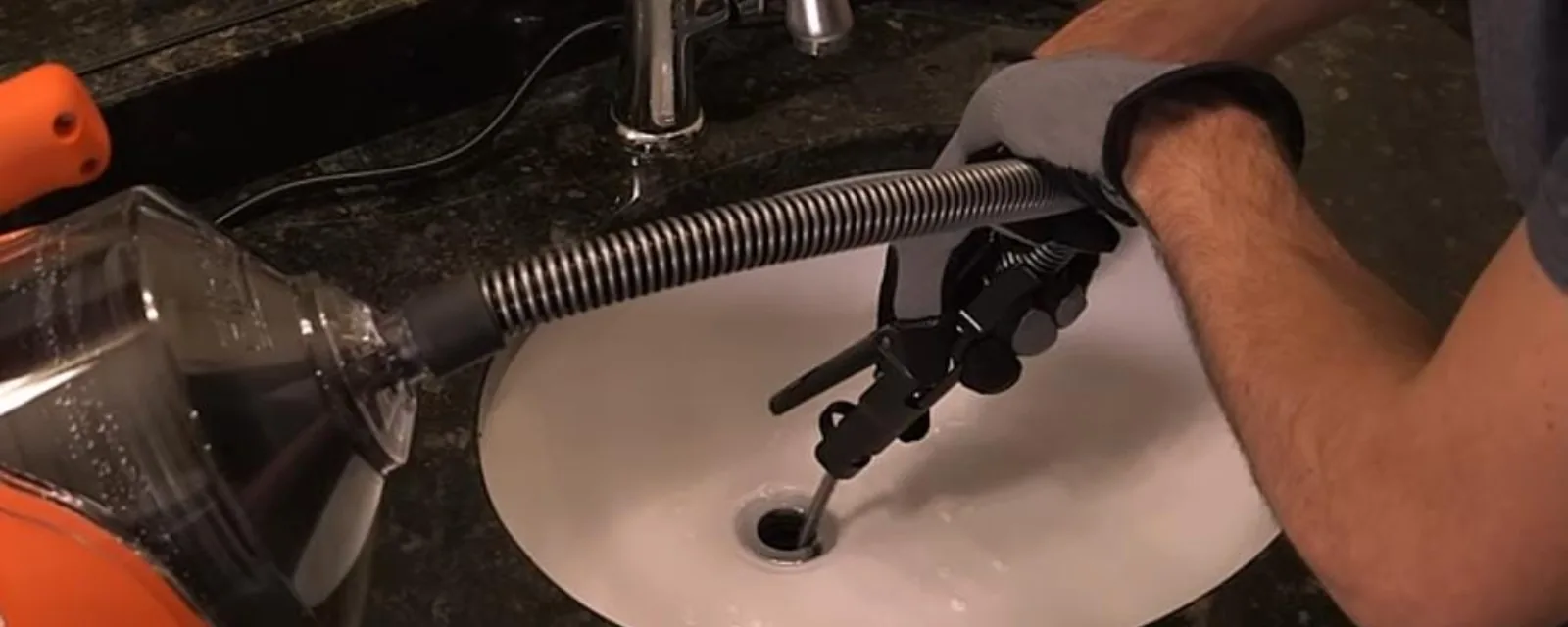
Many of these clogs sit within a foot or two of the opening. A plastic hair snare or a small drum auger often reaches them. Pull the stopper and clean it every few months so hair does not pack the trap arm.
Chemical openers eat at the plug and sometimes at the pipe. They also leave caustic liquid sitting in the line, which is a hazard for whoever opens the trap next.
Same drain clogging again?
Call the line and our dispatcher will send a licensed plumber to find out why.
Which fixture, which likely cause, which first move
Use this as a quick sorting guide. If the first move does not work, the cause is deeper than it looks.
| Fixture | Likely cause | First move |
|---|---|---|
| Kitchen sink | Grease and food buildup | Clean the P-trap, then use a drum auger |
| Bathroom sink | Hair, soap and toothpaste | Clear the stopper and trap arm |
| Tub or shower | Hair around the strainer | Lift the strainer and use a hair snare |
| Toilet | Too much paper or a hard object | Plunge with a flange plunger |
| Washing machine standpipe | Lint and detergent residue | Check the standpipe and lint trap |
| Floor drain | Silt, debris, a dry trap | Clear the grate and flush the trap |
| Several fixtures at once | Main line stoppage | Stop water use and call a plumber |
Toilets, in particular, deserve a different approach from sinks. A closet auger works better than a standard snake on a toilet trapway.
Things that should never go down a drain
A large share of clogs trace back to items that do not break down in a pipe. Keep these out.
- Flushable wipes. They are labeled safe but hold together in the pipe, catch hair and form ropes at joints.
- Feminine products and cotton swabs. They absorb water and snag on any rough spot.
- Paper towels. Unlike toilet paper they are built to stay strong when wet.
- Fat, oil and bacon grease. Pour them into a can and put it in the trash.
- Coffee grounds. They settle at low points and pack like sand.
- Small toys and bathroom items. Children drop them into toilets and sinks more often than parents expect.
Septic users have a further reason to be careful, since solids and grease also load a tank. If your home is on septic, contact Kern County Environmental Health about the system.
When roots, bellies and old pipe are the real cause
Some clogs are not about what you flush. Tree roots seek moisture and enter a sewer line at joints, then thicken until paper and waste catch on them. A line that clogs seasonally or after a heavy irrigation may be rooted.
A belly is a sagging section where the pipe has settled. Water pools in the low spot and solids stay behind when the flow slows. You can cable it open and it will clog again, because the slope is wrong.
Old pipe also scales on the inside. Cast iron grows rough crust, and clay joints can shift. These problems live in the main line, where our sewer line cleaning work and a camera inspection are the right starting point.
Vent trouble that looks like a clog
Every drain needs air behind the water. A plumbing vent runs from the drain system up through the roof. If a vent is blocked by a bird nest, leaves or ice, drains gurgle, empty slowly and sometimes suck air through a trap.
The symptom tricks homeowners into repeated snaking. If the fixture clears with the cable and slows again in a day or two, suspect the vent. A plumber can check airflow from the roof and clear the pipe.
Do not climb on a roof to check this yourself without proper fall protection.
Laundry standpipes and floor drains get ignored
A washing machine drains a lot of water quickly through a 2 inch standpipe. Lint, fabric softener residue and a stray sock can narrow it until the box overflows mid-cycle. A mesh lint catcher on the discharge hose cuts the load.
Floor drains in garages and laundry rooms collect silt, leaves and grit. Their traps also dry out, and when that happens sewer gas rises. Pouring a quart of water down the drain every month keeps the trap sealed.
In a hot Shafter summer, with July highs near 99 F, an unused floor drain trap can dry out faster, so check it after any long absence.
What a plumber can do that a store snake cannot
A hand-crank snake from a hardware store handles a trap clog. It struggles on long runs, around bends and through grease rings. A powered cable with the right cutter head goes farther and cuts instead of poking.
For grease and scale, a hydro jet washes the wall instead of drilling through the middle. A camera confirms what was removed and what is left. That combination answers the question of why a drain keeps clogging, which a snake alone seldom does.
Grease and the city sewer in Shafter
The City of Shafter provides sewer service to residential and commercial customers, and grease that leaves your house travels into that system. Fat that hardens in a lateral clogs your own line first, and it can also build up in shared mains.
If you run a food business or just want to know the city's expectations for grease disposal, ask City of Shafter Utility Services directly. Rules vary by property type, and we do not cite specific ordinances. Whatever the answer, keeping fat out of the sink protects your pipe and your sewer bill.
Source type: City of Shafter Utility Services page
Clog questions we hear from Shafter homeowners
Why does my Shafter drain keep clogging after I clear it?
A repeat clog means the cause is still there. Grease that was poked through, a belly that holds water or roots at a joint will each bring the clog back.
A camera look shows which one it is. Clearing the same drain again without a look usually just repeats the cost.
Is it safe to use liquid drain cleaner?
We advise against it. The chemicals can harm old pipe, burn skin and leave a hazardous pool for the plumber who opens the trap next.
A plunger, a hair snare or a small drum auger is safer for a simple clog.
How do I know if my main line is the problem?
Look for several fixtures draining slowly together, a toilet that gurgles when the washer runs, or water rising in the lowest tub or floor drain.
Stop running water and call. Do not open the cleanout cap during a backup unless the plumber tells you to.
Can tree roots clog an indoor drain?
Roots grow in the outdoor line, not in the fixture. They block the lateral and the backup shows up at your lowest drain.
A camera finds them, and cutters or a jet remove them. The opening they came through still needs attention.
Stuck with a drain that will not stay clear? Call (855) 575-2890 and our dispatcher will send a licensed plumber.