
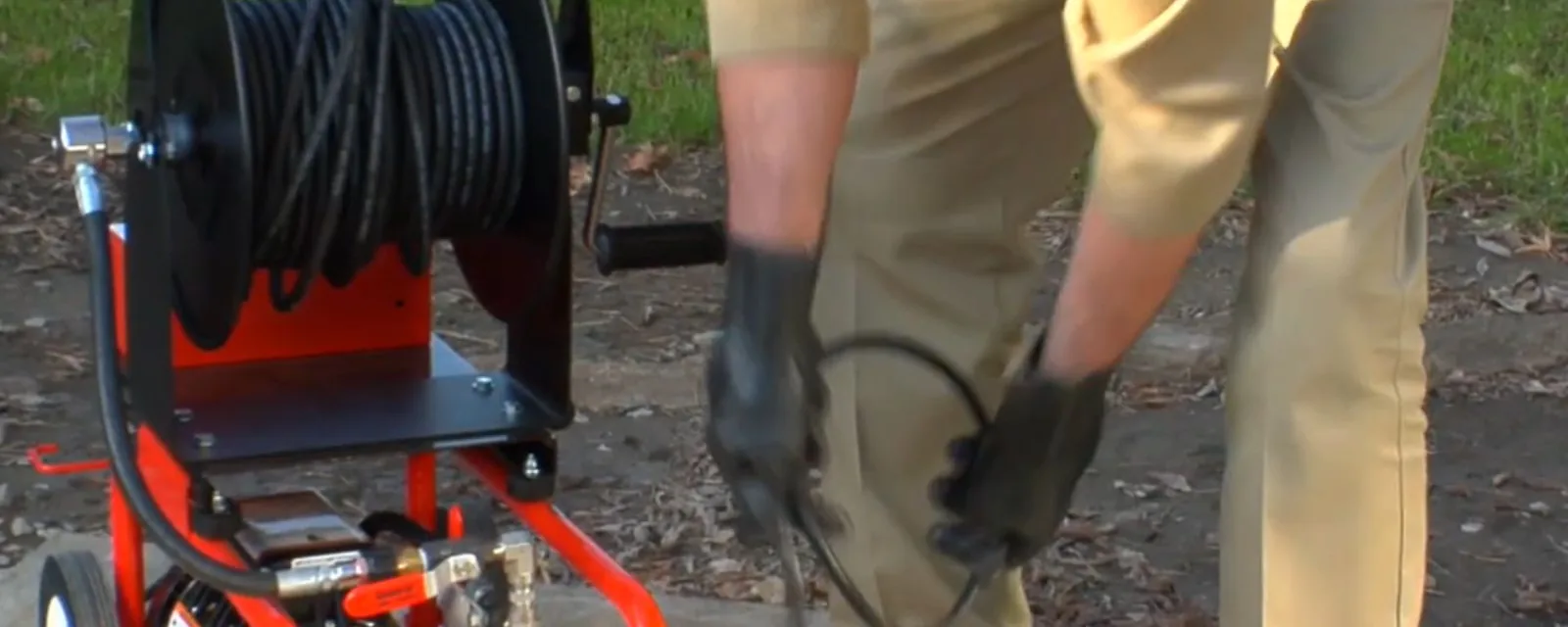
Short answer on jets and weak pipe
Yes, hydro jetting can damage a pipe, but only a pipe that was already compromised or a job done carelessly. Sound PVC, ABS and healthy cast iron take a properly run jet without trouble. A cracked clay joint or a rusted-through cast iron wall may not.
The honest version for a homeowner in Shafter, CA is that the water does not create the weakness. It finds it. A jet pushes water at a pressure that a good pipe shrugs off and a failing pipe cannot, and sometimes the cleaning is what reveals a defect that was hidden by buildup.
Buildup can be deceiving. Grease, scale or packed roots sometimes plug a hole or hold a loose joint in place. Remove them and the opening shows itself, usually as a drain that backs up again or damp soil near the line.
Where the damage actually comes from
Three things cause nearly all jetting trouble. The first is a pipe in poor shape. The second is too much pressure or the wrong nozzle for the pipe. The third is skipping the look inside before starting.
Pressure is measured in pounds per square inch, and the right setting depends on the pipe. A 2 inch kitchen branch and a 4 inch sewer lateral need different settings. A trained operator starts low and brings pressure up only as far as the stoppage requires.
Nozzle choice matters as much as pressure. A forward-heavy tip drilling into a soft spot does more harm than a rotary head that throws streams back at the wall. Dwelling in one place with a cutting head can also wear a thin section.
Pipe type by pipe type, how a jet is likely to treat it
This table shows how we think about common pipe conditions. It is general guidance, and the camera has the last word on any one line.
| Pipe condition | Jetting suitability | What we do first |
|---|---|---|
| PVC or ABS in good shape | Usually fine at moderate pressure | Camera pass to confirm joints and slope |
| Cast iron with light rust and scale | Often fine, scale removal is a common reason to jet | Camera, then lower pressure and a rotary head |
| Cast iron that is flaking or thin | Risky, the wall can open | Camera and tap test, then discuss lining or repair |
| Old clay with intact joints | Possible with gentle settings | Camera to check for offsets and root entry |
| Clay with offsets or cracks | Not advised until repaired | Camera, locate the defect and talk through repair options |
| Bellied or sagging section | Jetting clears debris but water pools again | Camera and locate, then plan a correction |
| Orangeburg or fiber pipe | Generally avoid high pressure | Camera, then cable gently or plan replacement |
Orangeburg is a pressed fiber pipe that softens and collapses with age. If the camera shows it, jetting is usually the wrong tool.
Want the pipe checked before it is jetted?
Call the line and our dispatcher will set up a licensed plumber with a camera.
Why the camera look is not optional
A sewer camera runs on a flexible rod with a light and a recording unit. It shows pipe material, joint spacing, roots, scale and any break. It also shows whether the blockage can be reached at all.
We use the camera to answer one question before the pump starts. Will this pipe survive the pressure we plan to use? If the answer is unclear, the plan changes to a cable, a gentler head or a repair first. A sewer camera inspection gives you the recording to keep, which also helps if you later sell or refinance.
There is a catch. During a full backup the camera may not pass the plug, so the plumber clears a path with a small cutter, then films the line, then decides. That sequence takes a little longer and avoids guessing.
When to call a stop before jetting
Some clues point to a fragile line before any tool goes in. If you notice these, mention them when you call.
- Repeat backups at the same spot. A defect such as an offset joint snags paper and grease again and again.
- Soft, sunken or unusually green ground over the line. Water may be escaping from a crack and feeding the soil.
- Gurgling plus slow drains in more than one fixture. This often points to the main line, which is where a defect hurts most.
- A history of root intrusion. Roots enter at joints, so a rooted line is also a line with openings.
- Bits of rust, clay or black flakes in the water that comes out. The pipe itself may be shedding material.
None of these means jetting is impossible. They mean the camera visit is worth doing first.
What a careful operator does differently
Care shows up in small choices. The hose goes in with the nozzle moving, never parked. Pressure comes up in steps. The operator watches the cleanout and the lowest fixture so water has an exit and the line never sits full and pressurized.
A good plumber also keeps the nozzle matched to the job. For roots, a chain or blade head cuts before the jet flushes. For grease, a rotary head scours the wall. For a hard plug, a penetrator opens a hole and then gives way to a gentler head.
Afterward comes a second camera pass. It confirms the wall is clean and shows whether the jet exposed anything. That final recording is the best protection for you and for the pipe. Jetting practice and cleanout placement both sit under the California Plumbing Code, which is based on the Uniform Plumbing Code (UPC).
When another method is the better call
A cable is the right tool for a single sink with a hair clog or a toilet with a hard object. It is quieter on an old pipe and needs less water. A cable also gets hung up less on fragile pipe than a high-flow nozzle does.
If the camera finds a break, cleaning is only a short-term fix. A crack, a collapsed section or a long belly needs a repair, and our sewer line repair page covers spot repair, lining and replacement trade-offs.
Sometimes the answer is to do nothing aggressive at all. A line that drains slowly but is intact may only need gentler maintenance cleaning on a schedule.
Who owns which stretch of sewer in Shafter
The City of Shafter provides sewer service to residential and commercial customers. That does not mean the city owns every foot of pipe between your toilet and the main. The private lateral from your building to the connection generally belongs to the property, and the point where the city side begins varies.
Before any jetting or repair on a lateral, ask City of Shafter Utility Services where the city side ends for your address. This also tells you who to call if a camera finds a problem in the shared main. A line that serves several properties is a different conversation than a single home lateral.
If the work involves digging or replacing pipe, ask the Building and Safety Division whether the job needs a permit. Permit rules vary by scope.
Source type: City of Shafter Utility Services and Building and Safety Division pages (City Hall, 336 Pacific Avenue)
Jetting and pipe damage questions from Shafter homeowners
Is hydro jetting safe for a house in Shafter, CA built decades ago?
It depends on the pipe, not the age of the house. Age is a reason to look first, because older homes may have clay, cast iron or fiber pipe in the ground, but any of those can be fine or failing.
Ask for a camera pass. If the line is sound, a gentle setting is often acceptable. If it is not, you will see why on the recording.
Will a jet fix a cracked pipe?
No. Water cannot close a crack. It can clear debris so the line drains for a while, but the crack remains and roots or soil keep coming in.
If the camera finds a crack, a repair or a liner is the real fix, and the cleaning is only a stopgap.
Can I rent a jetter and do this myself?
Small electric drain jets exist, but a sewer jetter is pressurized equipment that can injure skin and push water back into the house. Without a camera you cannot see what you are blasting.
We suggest a cable for light jobs and a plumber with a camera for anything on the main line.
What if the camera shows the pipe is too weak to jet?
We say so before any pressure goes in and talk through options. They include a gentle cable cleaning, spot repair, lining or replacement, depending on what the recording shows.
The decision stays with you, and the price is clear before work starts.
Do you serve Wasco and McFarland for sewer jetting and camera work?
Not sure what is in your line? Call (855) 575-2890 and a licensed plumber can look before anything is blasted.